REVIEW · POKHARA
Pokhara: Visit Best Seven Tourist Destination by Sharing Bus
Book on GetYourGuide →Operated by Crystal Holidays Adventure Pvt Ltd · Bookable on GetYourGuide
Pokhara has a way of stacking big views with quiet moments, and this 7-stop day does it efficiently. You’ll move by sharing bus between top Pokhara sights, with a strong mix of spiritual stops (World Peace Pagoda, Bindabasini Temple, Pumdikot Mahadev) and natural wonders (Davis Falls and multiple caves). I especially like the peace-first vibe at the pagoda and Pumdikot, and the value angle—pickup and drop-off within Lakeside for about $9 per person. The main thing to consider is that it’s very step-heavy: you’re told to climb around 200 steps, plus you’ll walk at each site.
Expect a 6-hour circuit with a live guide and hotel pickup (wait in the lobby about 10 minutes early). The bus portion can be crowded, and there can be delays when pick-ups run late—so keep your day flexible, wear comfortable shoes, and plan to take your time at the religious and cave stops.
In This Review
- Key points to know before you go
- A Seven-Stop Pokhara Day by Sharing Bus
- Plan for Steps, Short Walks, and the Reality of a 6-Hour Circuit
- Bindabasini Temple: Durga Devotion in Bagar and Panoramic Views
- Mahendra Cave, Bat Cave, and the Underground Segment Between Stops
- Mahendra Cave
- Bat Cave
- Gupteshwor Mahadev Cave and Davis Falls: A Water-and-Myth Pair
- Gupteshwor Mahadev Cave
- Davis Falls
- World Peace Pagoda and Pumdikot Mahadev Temple: Two Quiet Ways to See Pokhara
- The World Peace Pagoda
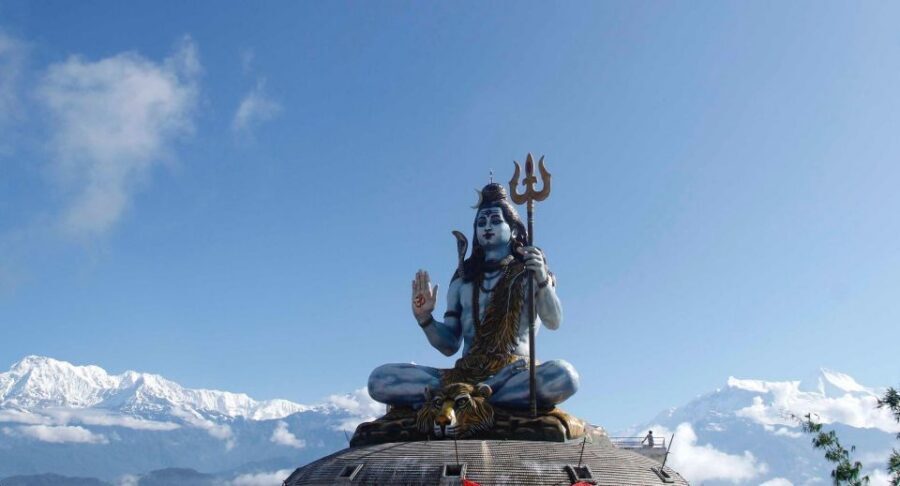
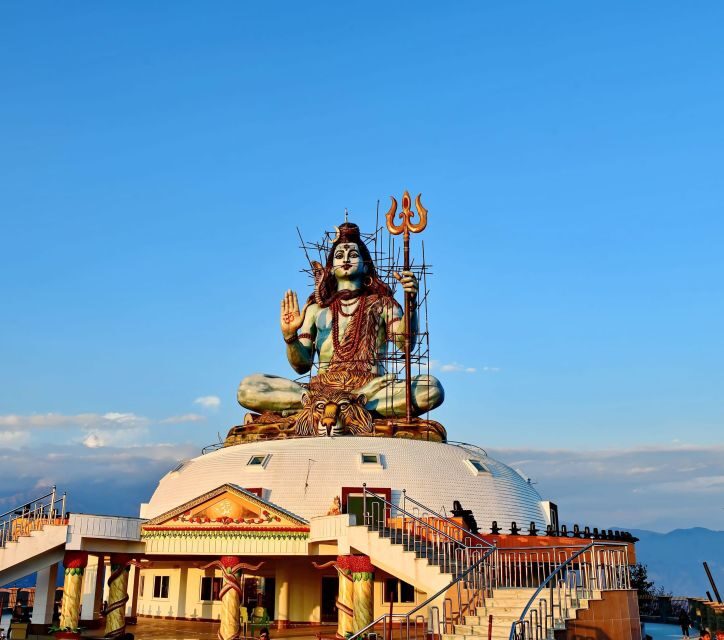
- Pumdikot Shiva Statue and Pumdikot Mahadev Temple
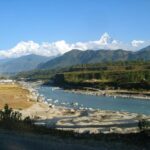
- Seti River Gorge: The Fast Stop That Still Matters
- Guides, Timing, and What Sharing Transportation Changes
- Tickets, Food, and the Real Value of the $9 Price
- Who This Tour Is Best For (and Who Should Rethink)
- Should You Book This Pokhara Sharing Bus Tour?
- FAQ
- How long is the Pokhara seven-destination tour by sharing bus?
- What does the price include?
- Are entrance fees included?
- Is food included in the tour price?
- Where are the pickup and drop-off points?
- How much walking and climbing should I expect?
- Is the tour wheelchair accessible?
- Are luggage, drones, or pets allowed?
Key points to know before you go
- A compact 7-sight sampler in about 6 hours, mixing temples, caves, and waterfall views
- World Peace Pagoda + Pumdikot Mahadev for calm, spiritual atmosphere and wide city/mountain viewpoints
- Cave sequence close together so you’re not bouncing all over Pokhara for underground stops
- Davis Falls on foot from Shiva Mandir with time for a proper waterfall stroll
- Bats cave access may be regulated to protect habitat, so don’t expect a guaranteed long visit
- Expect stairs and walking (around 200 steps total), and the tour isn’t for wheelchair users
A Seven-Stop Pokhara Day by Sharing Bus
This is the kind of Pokhara tour that works if you want variety without planning a whole transport puzzle yourself. The basic idea is simple: you get hotel pickup in the Lakeside area, then ride in a sharing local bus to a route of major “must-see” spots—temples for a spiritual reset, caves for geology and myth, and Davis Falls for that classic Pokhara waterfall moment.
The pricing is also part of the appeal. At about $9 per person, you’re paying for round-trip transport with a guide and the hotel handoff, not for entrances or meals. That makes it a good pick if you’re trying to keep your Pokhara costs sensible while still seeing the big hitters.
Now, the trade-off of sharing bus travel is control. You’re not in a private van with exact timing. If pick-ups run late or the bus is full, the day can run long. I like this tour format for the value and the local feel, but I’d treat it as a “flexible day,” not a precise stopwatch itinerary.
Other sharing-bus sightseeing tours in Pokhara
Plan for Steps, Short Walks, and the Reality of a 6-Hour Circuit
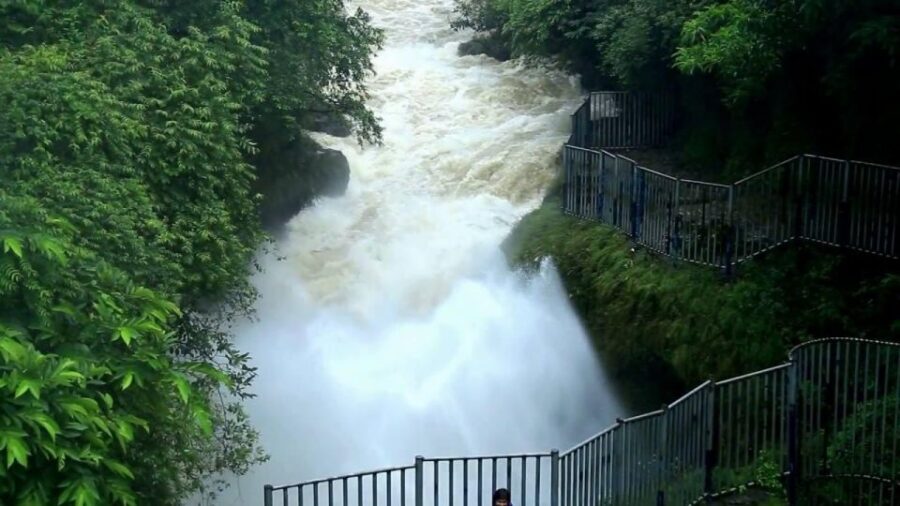
One detail you should take seriously: the tour is described as having about 200 steps of climbing on temple and cave sections. On top of that, you’re expected to walk at each stop. That means this isn’t a sit-and-see day.
So here’s the practical approach: wear shoes you’re happy to walk on all day, and dress in comfortable clothes you can move in. If you’re someone who tires easily on stairs, you’ll still be able to enjoy most of the sights—but pace yourself early, because the route includes multiple uphill moments (including the Pumdikot area and cave approaches).
Also note the tour isn’t suitable for wheelchair users. If mobility is a challenge, you’ll want to look for an alternate Pokhara plan that avoids the heavy step sections.
Bindabasini Temple: Durga Devotion in Bagar and Panoramic Views
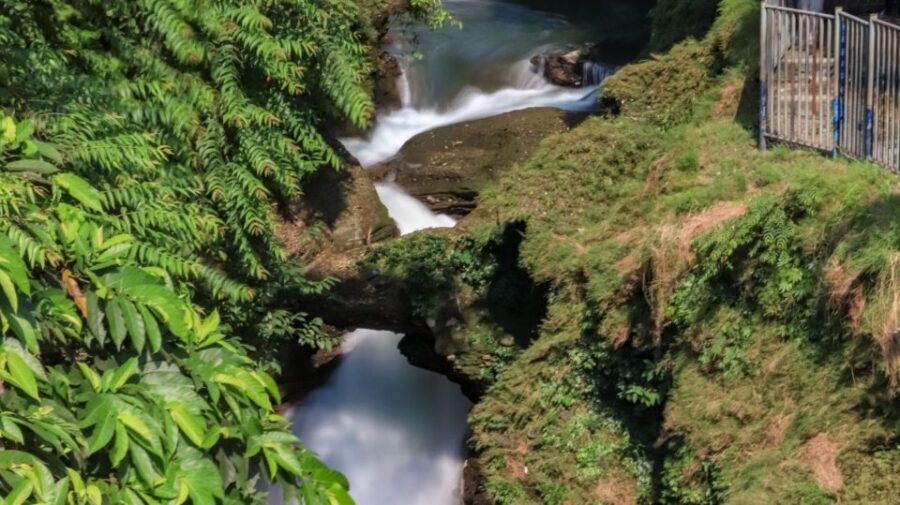
Your day begins with one of Pokhara’s most well-known Hindu shrines: Bindabasini Temple, dedicated to Goddess Durga. The route gets you by bus to Bagar, followed by a short walk to the temple.
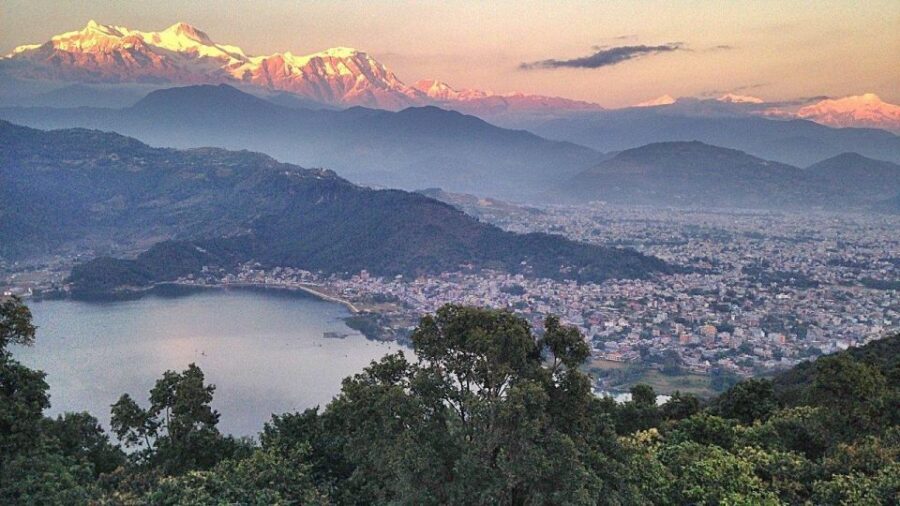
What makes Bindabasini worth your attention is the combination of devotion and outlook. You’ll see people offering prayers, and you’re also supposed to get panoramic views of the city from the temple area. Even if you’re not a “temple person,” this stop has a useful travel function: it gives you a clear, elevated view of where Pokhara sits—so the later sights make more sense as you move through the day.
Possible drawback? It’s one more walking stop in a day already built around movement. If you’re going to pause anywhere for photos, do it thoughtfully—spend a minute at your best view point, then keep your energy for the caves and waterfall later.
Mahendra Cave, Bat Cave, and the Underground Segment Between Stops
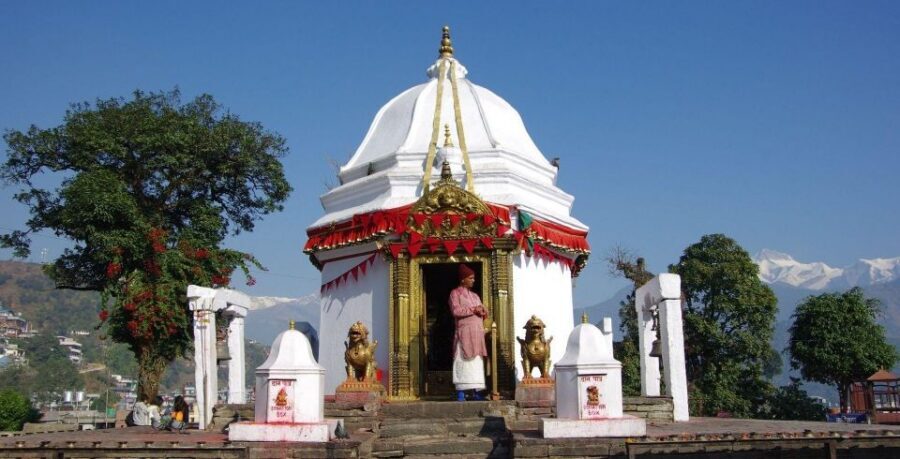
After Bindabasini, the tour shifts into caves—first Mahendra Cave, then a Bat Cave stop, and later another cave area near Davis Falls. This is smart routing, because it keeps the “underground part” of your day grouped instead of scattered across Pokhara.
Mahendra Cave
Mahendra Cave is in the Batulechaur area and is named after the late King Mahendra. You reach it by taking a bus to Mahendrapul, then walking a short distance. Inside, the emphasis is on limestone formations and underground chambers.
Why you’ll likely enjoy it: caves are one of those places where your brain stops rushing. You can take your time noticing how rock changes form, and it’s a different Pokhara story than lake views or waterfalls.


Bat Cave
Next comes the Bat Cave idea: a place that serves as a habitat for bats, offering shelter and roosting conditions. The key practical note here is that access may be regulated to protect bats and their habitat.
So don’t structure your expectations around an all-access cave photo shoot. Instead, treat this as an “observe and respect” stop. If you can’t go in as far or as long as you hoped, that’s not a “tour failure”—it’s part of how the bat environment gets protected.
Gupteshwor Mahadev Cave and Davis Falls: A Water-and-Myth Pair
You’ll hit cave territory again near the waterfall zone, then end with the most famous water spectacle: Davis Falls, known in Nepali as Patale Chhango.
Gupteshwor Mahadev Cave
Gupteshwor Mahadev Cave is described as an interconnected series of caves near Davis Falls. You reach the area by bus to Shiva Mandir, and then you visit a cave dedicated to Lord Shiva.
This stop leans into visuals: you’ll see natural rock formations and detailed stalactites and stalagmites inside the cave. The religious context also adds a layer—this isn’t presented as just a geology attraction. It’s tied to Shiva devotion, which often means the cave feels purposeful rather than purely “tourist.”
Davis Falls
Then comes Davis Falls. You’ll take a bus to Shiva Mandir and walk to the falls. What you’re going for is the powerful cascade and the legend associated with this waterfall.
Even if you’ve seen waterfalls before, Davis Falls has that “Pokhara-famous” energy because it’s so closely tied to local storytelling. It also works as a reset after caves: open air, sound, and a dramatic natural centerpiece.
Possible drawback? This part of the day includes both walking and stair sections elsewhere. So if you’re coming off a cave that demanded your full attention, give yourself permission to slow down at Davis Falls and just watch for a few minutes.
World Peace Pagoda and Pumdikot Mahadev Temple: Two Quiet Ways to See Pokhara
If your goal is a Pokhara day that feels more than just “sightseeing,” this is where it happens. Two stops in particular give you that calm, lifted feeling: World Peace Pagoda and Pumdikot Mahadev Temple (with the Pumdikot Shiva Statue stop in the same area).
The World Peace Pagoda
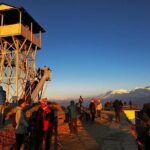
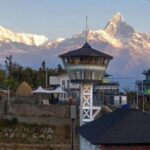
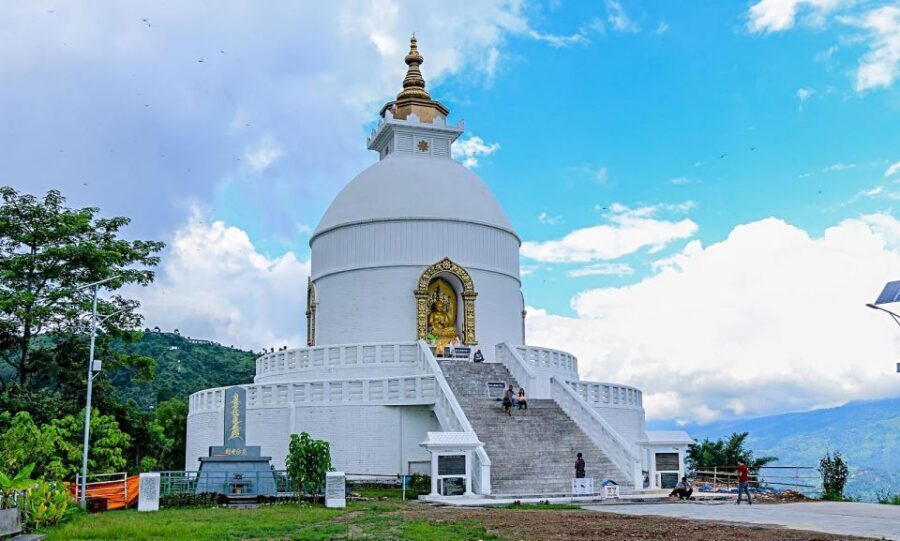
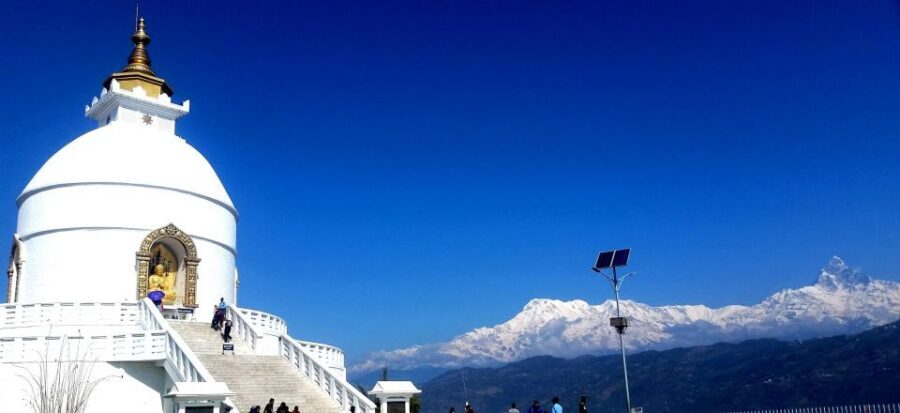
The World Peace Pagoda is a Buddhist monument on a hill overlooking Pokhara and the Annapurna mountain range. It’s described as a symbol of peace and harmony, and the atmosphere is meant to feel serene.
This is also a practical viewpoint stop. From the pagoda, you’re set up to understand the geography: how Pokhara spreads out below and how the mountains frame the city. If you’re the type who likes to connect dots between places, this one is worth treating as your “orientation view” of the day.
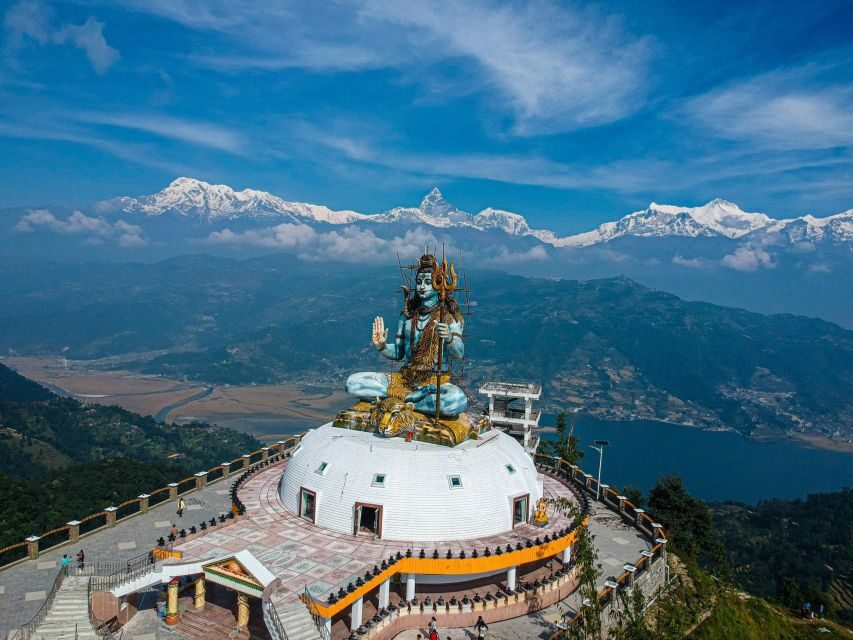
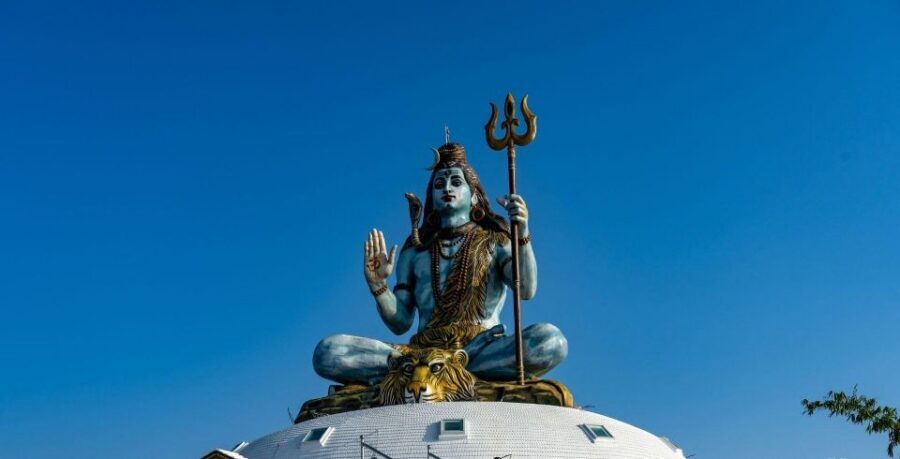
Pumdikot Shiva Statue and Pumdikot Mahadev Temple
Then you shift back into Hindu space with Pumdikot Mahadev Temple, dedicated to Lord Shiva. It’s in Pumdikot, a village near Pokhara, and it attracts devotees who come to pray and seek blessings.
This is the quieter counterpart to the pagoda. You get a peaceful spiritual atmosphere and panoramic views of the surrounding area. Combined with the pagoda, it gives your day an interesting rhythm: Buddhist calm, then Hindu devotion, each from a hilltop angle.
One note to respect: the tour info says there are about 200 steps in temple and cave sections. Pumdikot is one of the places where those stairs can be more than a quick climb. Go slow, pause if you need, and don’t rush your viewpoint time.
Seti River Gorge: The Fast Stop That Still Matters
Between the bigger spiritual and cave/water stops, there’s a brief visit to Seti River Gorge. The time here is short—about 10 minutes—so treat it like a photo and “glance” moment rather than your main attraction.
Why it still matters: it keeps Pokhara feeling like a place shaped by water and stone, not only a collection of temples and caves. Even a quick stop helps you feel the scale of what’s around the city.
Guides, Timing, and What Sharing Transportation Changes
You’ll travel with a live tour guide, and hotel pickup and drop-off are provided within the Lakeside area. That’s a helpful baseline, especially when you’re moving between multiple zones.
The best part of the people side is that the experience is positioned around having someone accompany you and keep you moving between stops. There’s also mention of a professional, kind guide and a harmonious group vibe—those are the ingredients for a smoother day on a tour like this.
Still, I’d plan around the reality of a shared bus:
- pick-ups can create delays if other guests aren’t ready
- the bus can be full
- timing can shift, especially with walking and stair breaks
That’s why I recommend you keep the rest of your Pokhara day unplanned. If you have a tight schedule after this tour, give yourself a buffer.
Tickets, Food, and the Real Value of the $9 Price
The headline price is about $9 per person, but the practical cost picture includes what’s not covered.
- Entrance fees are listed as about NPR 800 per person (approximate).
- Food and drinks are not included, so you’ll need to plan for a meal on your own.
- Personal expenses are also on you.
Here’s how I see the value: you’re paying for the hard part—getting organized transport between multiple sights plus a guide. If you were trying to do all of these alone with taxis or separate rides, the transport bill would likely climb fast. Paying separately for entrances and food is normal for Nepal day tours, and in this case the sightseeing package is dense enough to justify the setup.
One bonus sign: there’s enough flexibility in the day for a lunch break during the route (at least at times). That’s not something every busy Pokhara tour guarantees.
Who This Tour Is Best For (and Who Should Rethink)
This is a great fit if you:
- want a one-day highlights plan across temples, caves, and Davis Falls
- like religious sites with atmosphere and viewpoint moments
- prefer public/shared transport for cost and local rhythm
- can handle walking plus a stair-heavy segment
You might want to rethink it if you:
- struggle with stairs and prolonged walking
- need wheelchair access
- expect a fully private, on-the-dot schedule
Also, if you care about a specific language for the guide, it’s worth confirming in advance. One experience flagged that language expectations weren’t met, so don’t assume filters equal on-the-ground language support.
Should You Book This Pokhara Sharing Bus Tour?
Yes—if you’re prepared for a physically active day and you want to hit multiple top Pokhara sights in a smart, cost-friendly package. The tour’s strengths are clear: the peaceful spiritual stops (World Peace Pagoda and Pumdikot Mahadev), the standout nature moments (especially Davis Falls), and the efficient routing that strings together caves close to each other.
Before you book, double-check your comfort with stairs (about 200 steps), wear shoes built for walking, and plan your day with some wiggle room for sharing-bus timing.
If your travel style is “I want variety, I can walk, I like meaningful sights,” this is the kind of Pokhara day trip that makes sense.
FAQ
How long is the Pokhara seven-destination tour by sharing bus?
It runs for about 6 hours.
What does the price include?
It includes hotel pickup and drop-off within the Lakeside area, round-trip transportation by sharing local bus, and a live tour guide.
Are entrance fees included?
No. Entrance fees are listed as approximately NPR 800 per person.
Is food included in the tour price?
No. Food and drinks are not included.
Where are the pickup and drop-off points?
Pickup and drop-off are included within the Lakeside area of Pokhara, with specific hotels used as pickup/drop-off locations.
How much walking and climbing should I expect?
You will climb around 200 steps on the temple and to the cave areas, and you’ll also walk around at each visited place.
Is the tour wheelchair accessible?
No. It is not suitable for wheelchair users.
Are luggage, drones, or pets allowed?
Large bags, luggage, and drones are not allowed. Pets are not allowed (assistance dogs are allowed).