REVIEW · POKHARA
Entire Tour of Pokhara Valley with Guide
Book on Viator →Operated by Swami Narayan Travels Pvt Ltd · Bookable on Viator
This is a lot of Pokhara in one smooth, guided loop. You get hotel pickup from the Lakeside area, a private vehicle with an English guide, and a route built around the valley’s best viewpoints and classic nature stops. It’s the kind of day that works when you want big scenery but you’re short on time.
I especially like the mix of photo stops and calmer breaks: Sarangkot gives you the headline Annapurna view, and Begnas Lake is the slower, more relaxed counterpoint away from crowds. The private setup also means you spend less time negotiating transport and more time actually being in the places.
One thing to watch: mountain views can be hit-or-miss depending on haze. Nepal can get a thick, daily blanket that blocks distance, so if clear skies matter most to you, I’d plan your expectations accordingly and aim for flexibility.
In This Review
- Key things I think are worth your attention
- Price and Logistics: What $97.69 Really Buys in Pokhara
- Private vehicle pickup from Lakeside: less arguing, more seeing
- The route in order: how the day flows across the valley
- Sarangkot: the Annapurna viewpoint that’s worth budgeting for
- Begnas Lake: peace, nature, and an easy break from viewpoints
- Kahun and Foxing Hill: short stops for big Annapurna range views
- Kahun (about 25 minutes)
- Foxing Hill top (360-degree exploration)
- Gupteswar Gupha cave: a different kind of nature “wow”
- Devi’s Fall: the waterfall that drops from below
- International Mountain Museum: making sense of the peaks
- How this tour fits a real schedule (and why the pacing works)
- Mountain views and haze: what to expect and how to protect your day
- Who should book this private Pokhara Valley day
- Should you book it? My take
- FAQ
- FAQ
- How long is the Entire Pokhara Valley with Guide tour?
- Is hotel pickup and drop-off included?
- Is this a private tour or shared group?
- What’s included in the price?
- Are entrance fees included?
- Which stops does the itinerary include?
- Is boating included at Begnas Lake?
- What’s the deal with Sarangkot?
- What can I expect at Gupteswar Gupha and Devi’s Fall?
- Can I cancel for a full refund?
Key things I think are worth your attention
- Private car + hotel pickup in Lakeside means fewer logistics headaches
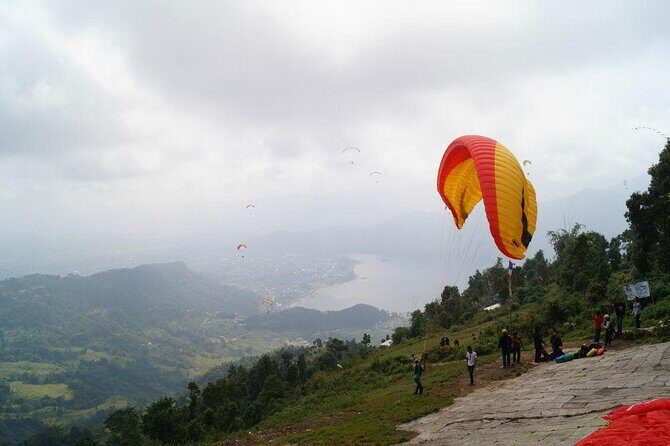
- Sarangkot and Kahun are short stops geared toward Annapurna-range views
- Begnas Lake is timed for a quiet break far from the city bustle
- Gupteswar Gupha and Devi’s Fall deliver two very different “wow” nature moments
- International Mountain Museum adds context about Nepal mountaineering beyond photos
- Your route can be customized, so you can lean more scenic or more cultural
Price and Logistics: What $97.69 Really Buys in Pokhara
At $97.69 per person for about 6 to 7 hours, this tour is paying for three things you’d normally fight for in Pokhara: time, local know-how, and transport. You’re not just getting a list of spots. You’re getting a driver, an English-speaking guide, and a plan that keeps moving between viewpoints without wasting daylight.
The big “gotcha” is that entrance fees are not included (about USD 10 per person is the rough estimate). That said, you still come out with strong value because most of the time on this route is sightseeing, viewpoints, and short nature/culture visits, not long museum-ticket marathons.
It’s also set up as a private trip, meaning only your group participates. Even if you’re traveling solo or as a couple, you’re not stuck waiting for a big mixed group to gather.
Other guided tours in Pokhara

Private vehicle pickup from Lakeside: less arguing, more seeing
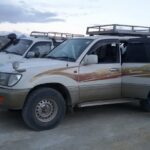
If you’ve spent time in a place where taxis require constant negotiation, you’ll appreciate how this tour handles transport. Hotel pickup and drop-off are included within the Lakeside area, and the round-trip transfer is done by private car with a driver.
I like this approach for Pokhara because the day gets simpler the moment you’re picked up. Less time coordinating, fewer delays due to price talk, and less stress if your schedule is tied to a trek or flight.
Also, you get a mobile ticket, which is a small detail but useful when you’re moving around town. You shouldn’t need paper tickets stuffed into a pocket.
The route in order: how the day flows across the valley
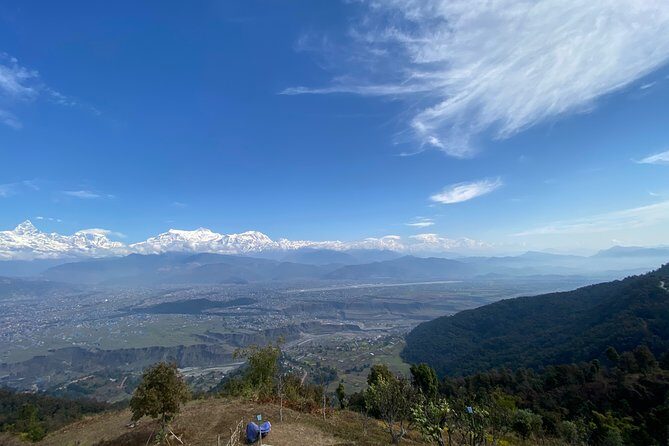
This is a “loop” style outing. You start with a major viewpoint area, move to a calmer lake stop, squeeze in more panoramas at shorter lookouts, then shift to caves/waterfall and finish with a museum.
The itinerary can be adjusted to your interests, but the core stops often include:
Sarangkot, Begnas Lake, Kahun, Foxing Hill, Gupteswar Gupha, Devi’s Fall, and the International Mountain Museum. That order matters because it helps you avoid backtracking as you move through different parts of the valley.
Timing-wise, expect roughly: 1 hour at Sarangkot, 1 hour at Begnas Lake, about 25 minutes at Kahun, time at Foxing Hill top, then around 35 minutes for the cave, 20 minutes for the waterfall, and about 1 hour at the museum. Real-world traffic and stops can nudge the finish time, which is why the tour is listed as 6–7 hours.
Sarangkot: the Annapurna viewpoint that’s worth budgeting for
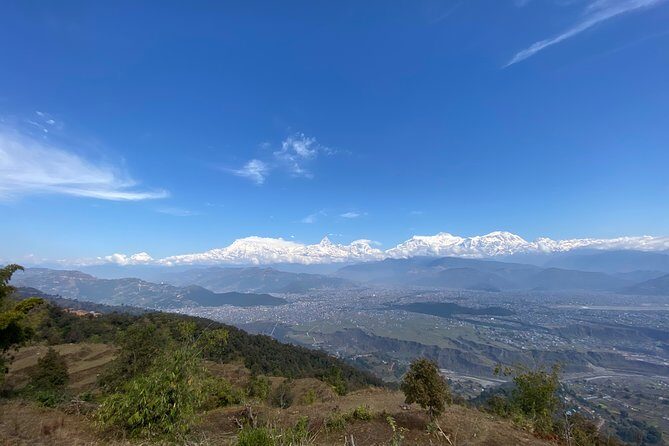
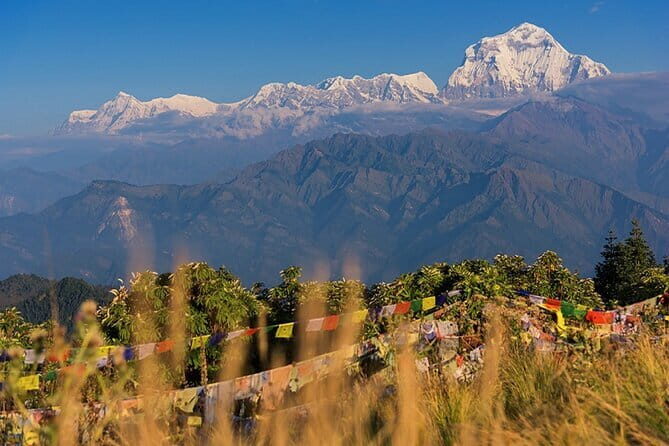
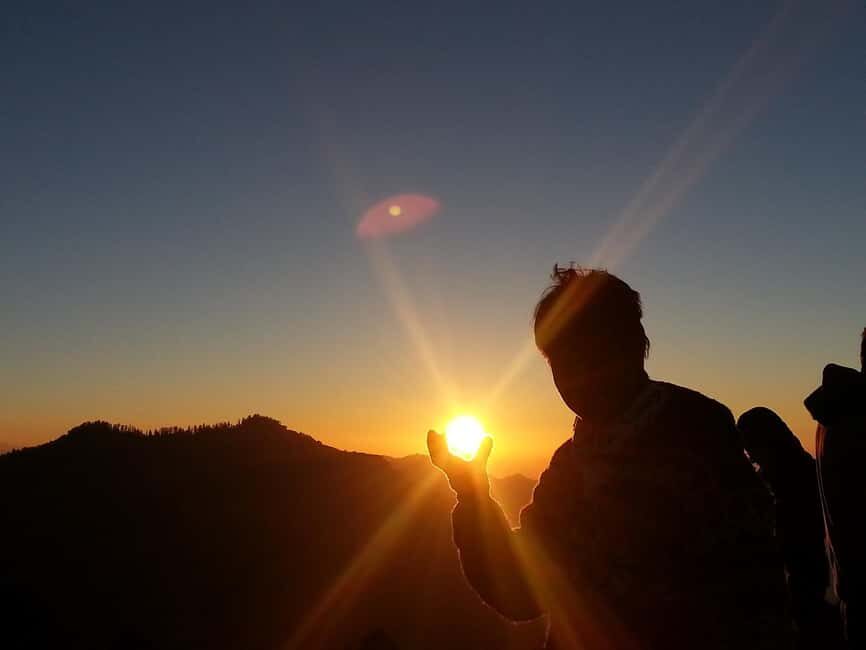
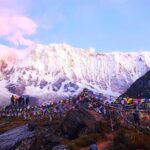
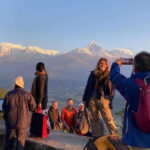
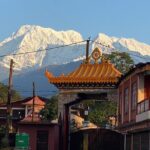
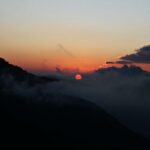
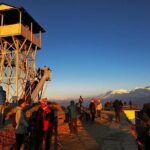
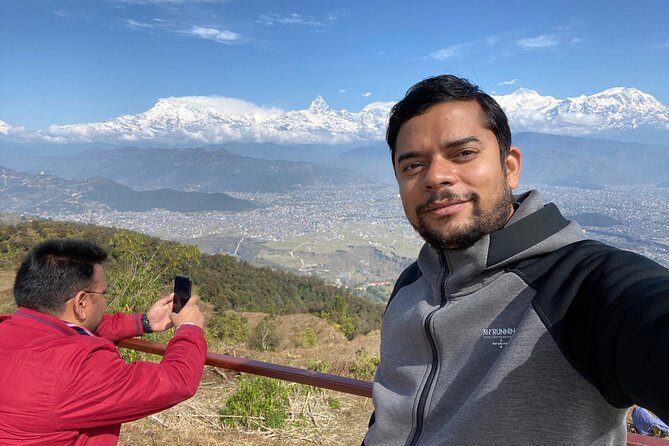
Sarangkot is the star opener. It’s described as the best viewpoint to see sunrise over Mt Annapurna, with about 1 hour at the stop. If you’re hoping for a clean view of the Annapurna range, this is the time to focus on it.
One practical consideration: sunrise planning depends on when your pickup happens. The tour can work for different schedules, but if you want actual sunrise rather than a late-morning view, ask your guide early about timing so you’re not standing there when the light is already slipping.
Even when the sky isn’t crystal clear, Sarangkot can still be rewarding because you’re looking down over the valley, and the vantage points here are designed for panorama viewing. Just know you may not always see sharp peaks if haze rolls in.
Tip: if clarity matters to you, bring patience. This is one of the stops where waiting a few minutes for the sky to change can make a difference.
Begnas Lake: peace, nature, and an easy break from viewpoints
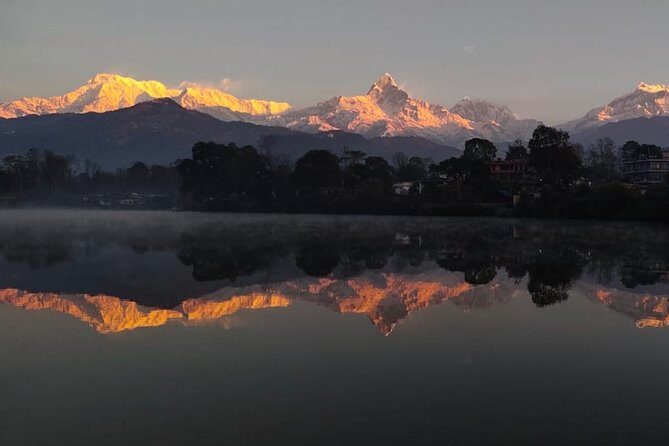
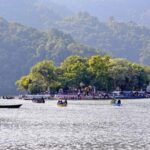
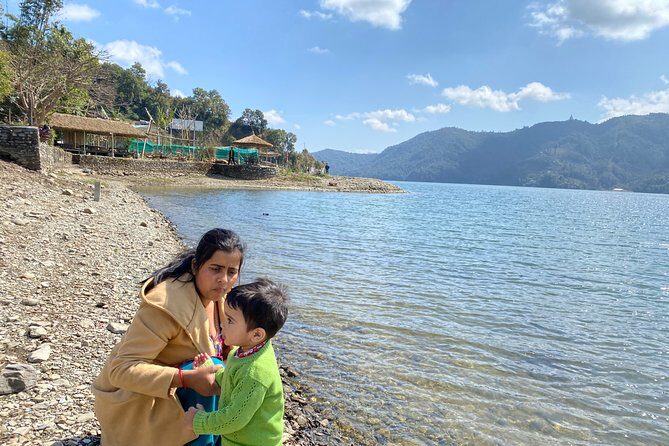
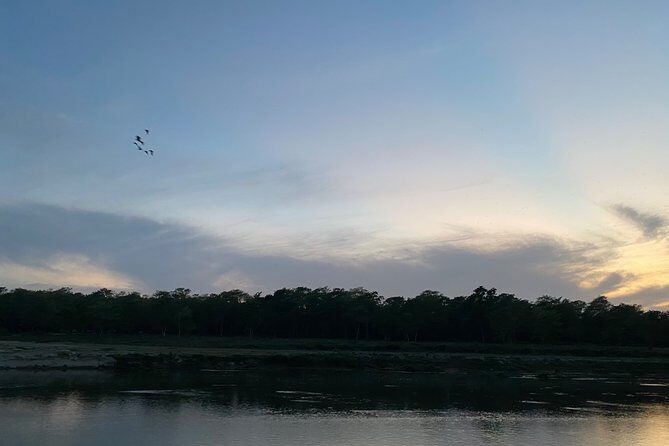
After the viewpoint push, Begnas Lake is where the tour slows down. The stop is 1 hour, and it’s known as a natural, beautiful lake that’s far from the crowded city area. It’s also described as a great place for boating in peace.
The value here isn’t just scenery. It’s the pause in the schedule. After multiple viewpoint stops, a lake break helps you reset your eyes. You get a different feel than the higher, more exposed lookouts.
One note: the tour data says Begnas Lake is best for boating, but it doesn’t say boating is included. So if you specifically want to do it, ask the guide on the spot what’s available and what might cost extra.


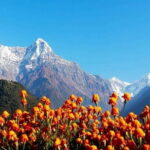
Kahun and Foxing Hill: short stops for big Annapurna range views
Next you head to two more panorama spots, and both are built for quick photo time rather than long wandering.
Kahun (about 25 minutes)
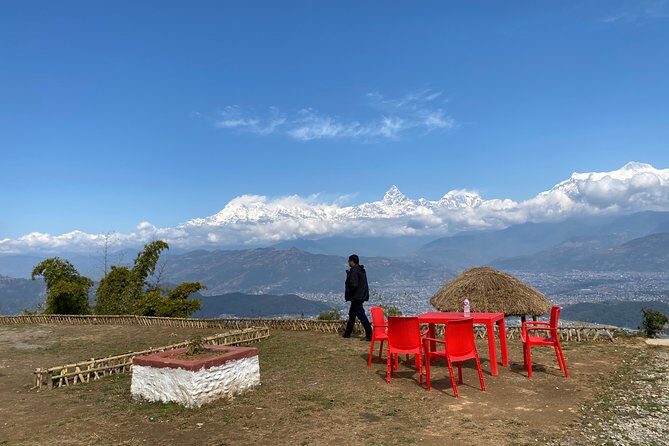
Kahun is listed as another newly opened best viewpoint for seeing the Mt Annapurna ranges, with around 25 minutes there. That short window means you should treat it like a “get your bearings, take your photos, then move on” stop.
Foxing Hill top (360-degree exploration)
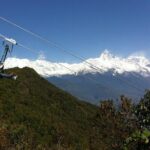
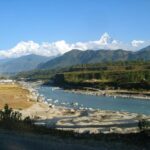
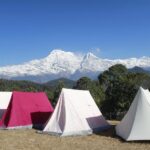
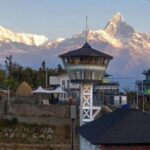
Then there’s Foxing Hill top, described as a unique place where you can explore 360 degrees of the Annapurna ranges. This is the kind of stop that can feel magical when the air is clear, because the point is full-circle visibility rather than a single angle.
Because mountain views can be affected by haze, these two lookout stops are best approached with two minds at once: go there for the panorama, but don’t build your entire emotional day around perfect peak visibility. If the visibility is limited, you’ll still likely get rewarding valley and sky views, and that’s still the whole point of choosing Pokhara.
Gupteswar Gupha cave: a different kind of nature “wow”
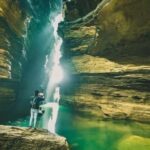
At Gupteswar Gupha, you’re stepping into something more textured than viewpoints. It’s described as an amazing cave where a river blows beneath, with about 35 minutes at the site. Entrance is not included.
This stop is valuable because it breaks up the day from “look outward” sightseeing into “look inward.” Caves also tend to feel cooler and more sheltered than open viewpoints, which can be a relief on a warm day.
Practical expectation: you’re moving through a cave environment, so comfortable footwear matters. The tour data doesn’t mention gear, so I’d simply plan for uneven ground and follow what your guide recommends.
Devi’s Fall: the waterfall that drops from below
Devi’s Fall is one of Pokhara’s classic weird-and-wonderful sights. You get around 20 minutes here, and it’s described as a unique waterfall that falls from below to downwards. Entrance is not included.
The appeal of Devi’s Fall is the quick impact. You don’t need hours to enjoy it. With a private itinerary, you can fit it in without the day becoming only checkpoints and driving.
Again, the cave stop and the waterfall stop create balance: both are nature moments, but one is contained (cave) and one is visible action (waterfall). If you like variety, this pairing is a smart use of your time.
International Mountain Museum: making sense of the peaks
Finish your loop with the International Mountain Museum, timed at about 1 hour. Entrance is not included, and the museum displays mountaineers in Nepal.
Even if you’re only in Pokhara for a short stretch, I think this hour is useful because it adds context. Instead of treating the mountains as just photos in the background, you start connecting them to people and Nepal’s climbing culture.
This is also a good “buffer” stop. If the earlier viewpoint conditions are poor, the museum helps keep the day meaningful because it’s not dependent on clear skies.
How this tour fits a real schedule (and why the pacing works)
The biggest benefit of this route is pacing. You’re not just jumping between far-apart sites randomly. The sequence is designed so you alternate:
- viewpoint intensity (Sarangkot, Kahun, Foxing Hill),
- calmer nature time (Begnas Lake),
- and then compact “must-see” stops (Gupteswar Gupha, Devi’s Fall),
- with a museum finish.
That rhythm is especially helpful if you’re doing a Himalayan trek soon or right after. Pokhara can feel like a “breather” before or after the mountains. This tour gives you a full valley day without pushing you into a second, separate logistics-heavy outing.
Also, the route is described as customizable. If you’d rather swap one of the viewpoint elements for a different interest, you can ask your guide. That’s a practical advantage when you know what kind of traveler you are.
Mountain views and haze: what to expect and how to protect your day
Here’s the honest part: Pokhara’s views are incredible when the air is clear, and frustrating when haze shows up. One of the most direct critiques tied to the region is that pollution and illegal burning can create a thick haze that blocks mountain views most days.
So what should you do with that information?
- Go for the viewpoints, but don’t treat them like a guarantee. Sarangkot and Foxing Hill are your best bets on the schedule, yet visibility can still be reduced.
- Treat the day as a valley experience, not a single “see Everest” mission. Even with limited peak visibility, the viewpoints still show the valley structure and sky.
- Ask your guide what time of day is best for views during your date. A good guide can sometimes adjust emphasis within the same route.
This is why I like starting with Sarangkot early in the day. If clarity improves later, you still have Kahun and Foxing Hill as follow-ups. If clarity stays poor, the lake, cave, waterfall, and museum still keep your day full.
Who should book this private Pokhara Valley day
This tour makes the most sense if you:
- want a short-on-time day in Pokhara,
- prefer a private guide and car over arranging transport yourself,
- enjoy a mix of viewpoints + nature stops + a museum,
- like the idea of hotel pickup from Lakeside so your day starts clean.
It’s also a strong option for people connecting between travel days, like before/after a trek. The route is designed to hit multiple highlights in one go without asking you to manage details all day.
If you’re the type who wants to spend half the day hiking just to reach one viewpoint, this might feel a bit “fast.” But if you want the valley’s highlights in a guided order, it’s a smart fit.
Should you book it? My take
I’d book this tour if you want a smooth Pokhara day with private transport, an English speaking guide, and a plan that covers major highlights without turning your schedule into chaos. At $97.69 per person, the value comes from how much you’re bundling: pickup/drop-off, private car driving, guidance, and multiple key stops in one timeline.
I would not book if your main goal is ultra-reliable mountain peak visibility and you’re the type who gets upset when conditions aren’t perfect. Haze can happen, and while the itinerary hits the best viewpoints, the sky still has the final vote.
If you do book, I’d go in with the mindset of getting a great day in Pokhara even when the peaks are hazy. The lake, cave, waterfall, and museum keep the experience from being only about what the mountains do that day.
FAQ
FAQ
How long is the Entire Pokhara Valley with Guide tour?
It runs about 6 to 7 hours.
Is hotel pickup and drop-off included?
Yes, pickup and drop-off are included within the Lakeside area of Pokhara.
Is this a private tour or shared group?
It’s a private tour/activity, and only your group participates.
What’s included in the price?
Hotel pickup & drop-off (within Lakeside), round-trip transfer by private car with a driver, an English speaking tour guide, bottle of water, and the private trip.
Are entrance fees included?
No. Entrance fees are not included, with an approximate total of USD 10 per person.
Which stops does the itinerary include?
It can include Sarangkot, Begnas Lake, Kahun, Foxing Hill top, Gupteswar Gupha, Devi’s Fall, and the International Mountain Museum.
Is boating included at Begnas Lake?
The stop is described as a good place for boating, but boating is not listed as included in the tour.
What’s the deal with Sarangkot?
Sarangkot is described as the best viewpoint to see sunrise over Mt Annapurna, with about 1 hour there.
What can I expect at Gupteswar Gupha and Devi’s Fall?
Gupteswar Gupha is an amazing cave with a river blowing beneath, and Devi’s Fall is a unique waterfall that falls from below to downwards.
Can I cancel for a full refund?
Yes, free cancellation is available. You can cancel up to 24 hours in advance for a full refund.