REVIEW · POKHARA
Poon Hill Ghandruk Circuit Trek from Pokhara 4 Days
Book on Viator →Operated by Pokhara Adventure Nepal (PAN) · Bookable on Viator
Sunrise at Poon Hill is the big headline here. You’ll hike through hill villages on a short 4-day route that blends big views with real Nepalese life in Ghandruk. Day 3 is built around the early push so you don’t miss the Annapurna and Dhaulagiri sunrise show.
Two things I really like: the clear structure of the hike (no huge, unknown slog days) and the practical support you get along the way. An experienced English-speaking guide helps you move smart, and lodge choices tend to get good marks for comfort and hot drinks.
One consideration: you’ll still be walking several hours each day, and the early start for sunrise on Day 3 means less sleep than you’d like. If you’re sensitive to cold mornings, pack and plan for it.
In This Review
- Key highlights that matter on this trek
- From Pokhara to Ulleri: a gentle start that sets your pace
- Ulleri to Ghorepani via Banthali: village rhythm and big peak glimpses
- Poon Hill before dawn: the sunrise plan that drives everything
- Down to Ghandruk: Gurung village nights and lodge comfort
- Ghandruk to Pokhara lakeside: downhill walking and rhododendron breaks
- Price and value for $265: what’s actually included (and what it isn’t)
- Your daily experience: how the guide and teahouses shape the trip
- Who should choose this trek, and what might not fit
- Small preparation that matters: permits, photos, and timing
- Should you book the Poon Hill to Ghandruk Circuit from Pokhara?
- FAQ
- How long is the Poon Hill Ghandruk Circuit trek from Pokhara?
- What’s included in the trek price of $265 per person?
- Do I get picked up and dropped off in Pokhara?
- Do I need teahouse or lodge accommodation arrangements myself?
- What permits are included?
- Do I need to send passport details and a photo?
- What will I do at Poon Hill on Day 3?
- Is this a private group or shared with strangers?
- What is not included in the tour price?
- FAQ
- Can I cancel for a full refund?
Key highlights that matter on this trek
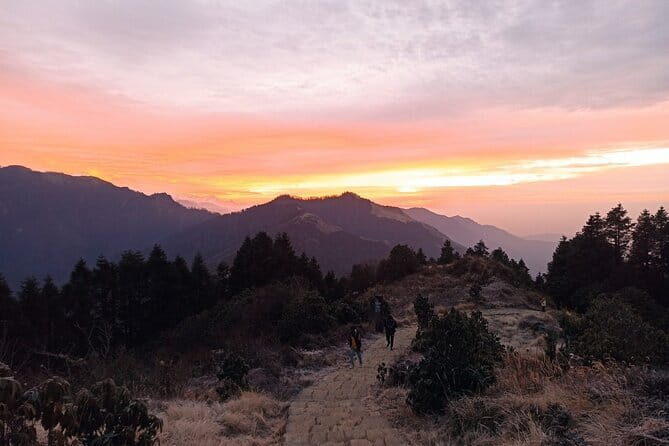
- Poon Hill sunrise timing built around a before-dawn start for the clearest mountain light
- Ghandruk Village with Gurung culture plus a night where hospitality is part of the point
- Teahouse lodge stays included so you’re not figuring out where to sleep mid-hike
- Permits handled with Annapurna Conservation Area permit and TIMS included
- Guide names you may hear like Prakash and Kabi, known for helpful, smooth arrangements
- Value stacking: pickup/drop-off, guide, accommodations, and transfers are all included
From Pokhara to Ulleri: a gentle start that sets your pace
This trek is designed to feel like a real Himalayan circuit without eating your whole trip. You begin in Pokhara, then transfer to Nayapul first by sharing bus (about 1.5 hours). Once you reach the trailhead area, you start climbing toward Ulleri (2,070m). Day 1 is listed at around 7 hours, but the shape of it matters more than the total number.
Why I like this “warm-up” day: you start moving uphill right away, but you’re not jumping straight into the most intense elevation gains. Ulleri is a classic first stop because it gives you time to settle into trail rhythm—breathing, footing, hydration—while the scenery already starts showing why people come to this side of the Annapurna region.
You’ll be hiking through small settlements along the way. That’s part of the charm: you’re not just walking between viewpoints, you’re moving through daily life. As the hours pass, the air usually feels sharper, and the views tend to build—so the effort starts to make sense.
One practical tip that makes Day 1 easier: wear shoes you trust. The first day is when your feet decide if the trek will feel smooth or stressful. If your footwear is already broken in, you’ll enjoy the walk more and you’ll recover faster for the next day.
Other Ghorepani and Poon Hill treks in Pokhara
Ulleri to Ghorepani via Banthali: village rhythm and big peak glimpses
Day 2 hikes from Ulleri to Ghorepani (about 6 hours). The route takes you through Banthali, where the Magar community lives. This isn’t a “pass-through” only experience. You get small moments of seeing how people organize daily life at hillside elevations—houses, fields, and the steady flow of trail activity.
What makes Banthali interesting for view-chasers is that it can line up with some of the region’s famous mountains. The trek description calls out views toward Annapurna South and Himchuli, and those names aren’t random hype. In this area, the mountain angles can look different village to village, so you’ll often feel like the peaks are repositioning as you walk.
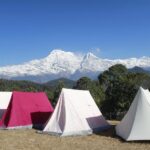
Ghorepani is where the trek’s rhythm shifts toward “teahouse trekking.” This is the area people often expect: lodges along the trail, hot tea when you stop, and a feeling that you’re living at trekking altitude for a couple of nights. Since teahouse accommodation is included, you’re not spending energy scouting rooms. That’s a real value point on a short trek like this.
Also, remember this: Day 3 is sunrise-focused. So Day 2 is where you should think strategically—how you’ll charge your phone (if needed), how early you’ll be up, and what you want to feel like when you start the predawn climb.
Poon Hill before dawn: the sunrise plan that drives everything
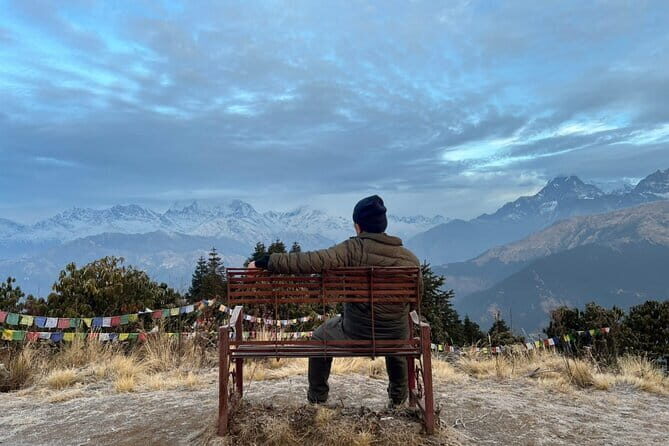
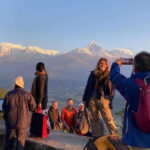
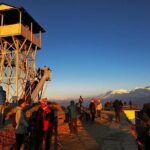
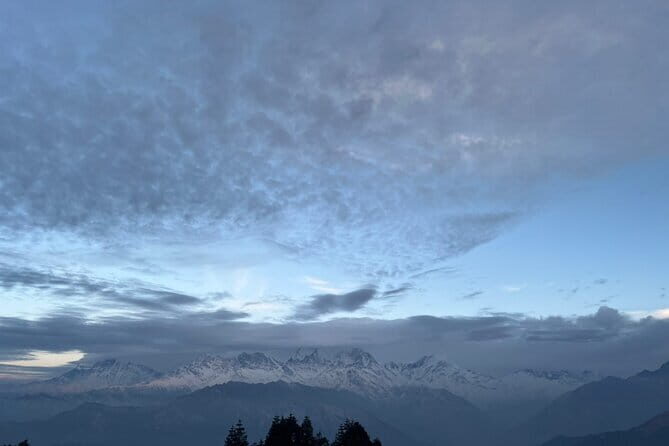
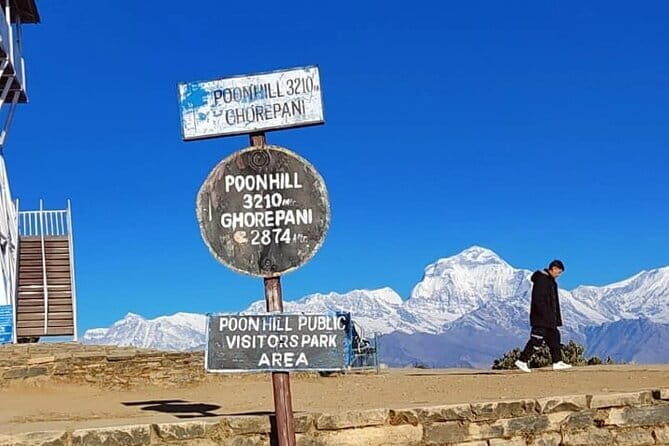
Day 3 is the showpiece, and it’s very intentional. You’ll start the trek before dawn to reach Poon Hill (3,210m). The climb from the base is described as taking nearly 1 hour, which is perfect for early-morning effort: long enough to feel like a proper climb, short enough that most people can manage it with breaks.
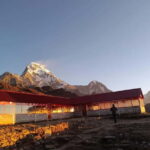
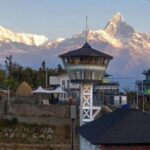
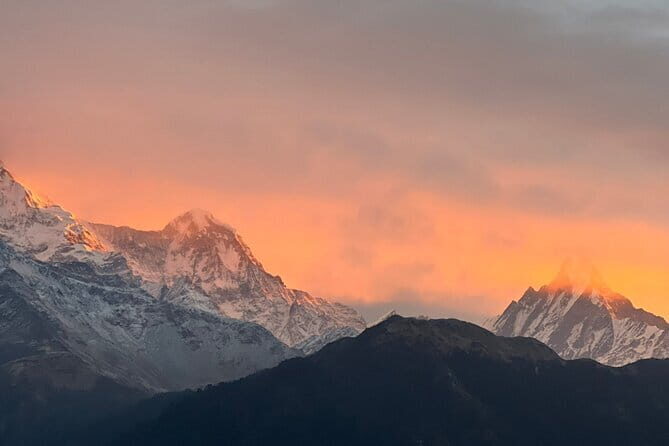
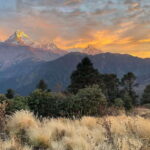
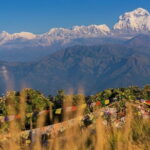
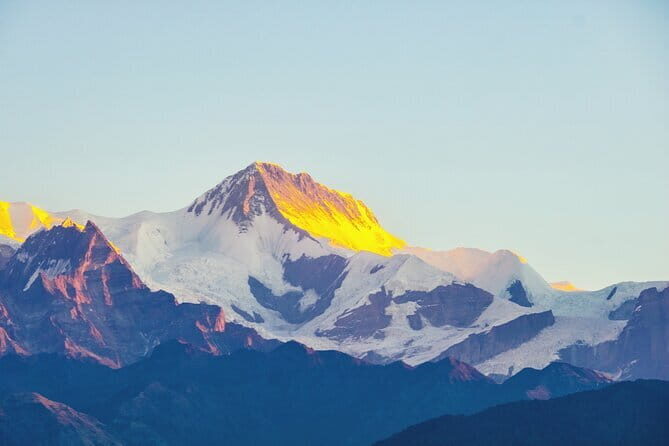
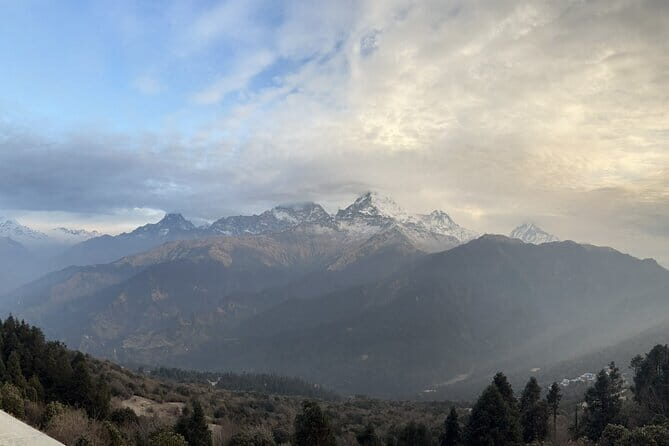
Once you’re at the top, you’re in position for sunrise views across the Annapurna and Dhaulagiri ranges. The description highlights the mountains you’ll likely see in the skyline: Mt. Machapuchare (Fishtail), Annapurna I, and Dhaulagiri. Even if clouds show up some mornings, that predawn push is still worth it because the time window is what gives you your best shot at clear light.
Why Poon Hill works so well on a 4-day circuit: it’s a big payoff with a short “summit-style” commitment. You’re not on an all-day high point hunt. Instead, you do a focused early push, watch the sky change, then transition into the next leg without lingering fatigue.
After sunrise, you head back toward Ghorepani for breakfast, then continue downward toward Ghandruk. That means Day 3 isn’t only about the mountain show; it’s about recovery and downhill movement afterward. It’s smart pacing because you’re setting yourself up for a comfortable night in a village known for hospitality.
Down to Ghandruk: Gurung village nights and lodge comfort
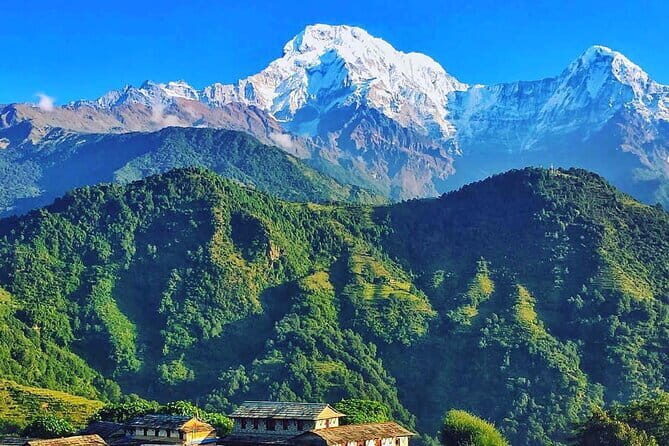
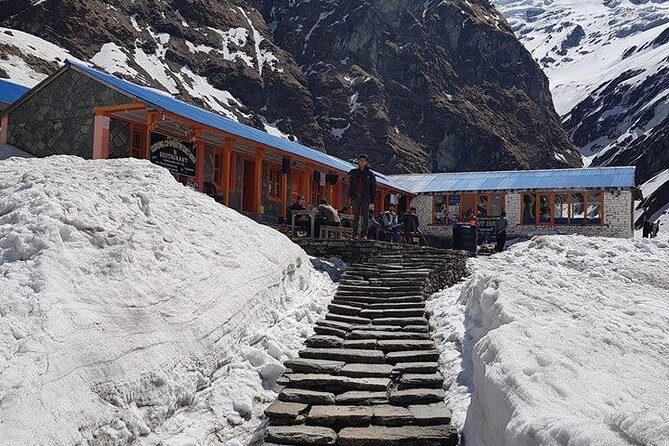
Ghandruk is one of the reasons people love this trek. It’s a Gurung village in the Kaski District, and the experience is described as culturally rich, with an emphasis on village life and warm hospitality. You’ll also spend time among traditional stone houses—exactly the kind of on-the-ground human detail that makes the mountains feel connected to real communities rather than just scenery.
You’ll reach Ghandruk on Day 3 and stay overnight in a teahouse/lodge. The provided experience info doesn’t oversell luxury, but it does include teahouse accommodation as part of the package, which matters on a short itinerary. You’re not searching for rooms while you’re tired.
One comfort detail that stands out from operator service praise is the focus on clean, comfortable rooms and practical lodge basics. People associate this trek operator with good lodge arrangements, with mentions of hot water and very good meals. That doesn’t mean every lodge will be identical night to night, but the intent is clear: you should finish the day and feel taken care of.
This is also your last night on the circuit. So spend some time after dinner or after you get settled. In a village like Ghandruk, the atmosphere can be calm and human-scale. That quiet time is where this trek starts to feel less like a checklist and more like a journey.
Ghandruk to Pokhara lakeside: downhill walking and rhododendron breaks
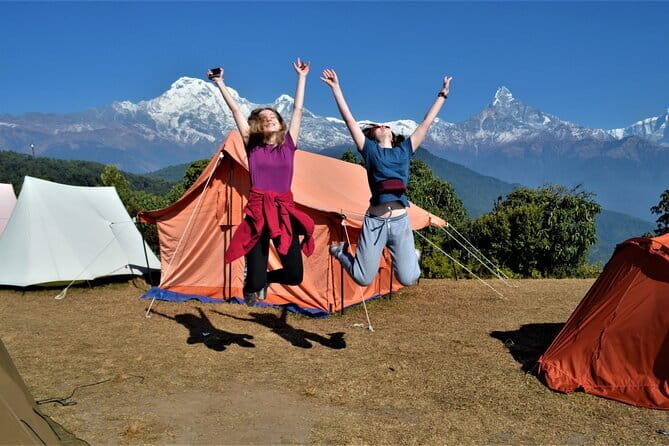
On Day 4, you go from Ghandruk down toward Pokhara Lakeside. The itinerary describes a scenic route with downhill hiking, and it specifically notes a rhododendron forest crossing. You’ll also pass familiar peak silhouettes as you descend—names like Annapurna I, Annapurna South, Dhaulagiri, Fishtail (Machapuchare), and Himchuli are all part of what you’re meant to wave goodbye to on this final day.
This day is listed at about 7 hours, and the key point is that it’s downhill. Downhill is good for distance coverage, but it can be hard on knees and feet. If you tend to feel stiffness after descents, plan for slow steps and frequent micro-pauses. A guided group can help with pace, but your body is the real boss on the last day.
Why this descent is worth it: it transitions you out of trekking mode. You stop chasing sunrise light and start moving back toward the comfort of Pokhara. That change of pace is a relief if you want the trek to feel like an escape without turning into an endurance project.
Once you reach Pokhara Lakeside, you’re done—no extra high-altitude linger. That’s a major reason this route works for a wide range of people, including first-time hikers who want a strong introduction to the region.
Other Ghandruk village treks in Pokhara

Price and value for $265: what’s actually included (and what it isn’t)
At $265 per person for a roughly 4-day trek, the best way to judge value is to look at what you aren’t paying for separately.
Included in your price:
- Hotel pickup and drop off in Pokhara
- Teahouse (lodge) accommodation during the trek
- Annapurna Conservation Area permit & TIMS
- An experienced English-speaking trekking guide
- Round trip transfer by sharing bus
- Private trip (only your group participates)
That mix is why this can feel like good value. Permits and guide services alone can add up quickly if you try to DIY it. Here, they’re folded into a single package, and you’re not trying to piece together transport and sleeping arrangements while you’re already tired and altitude-slowed.
What’s not included:
- personal expenses
- Gratitude (this usually means tipping, but the key fact is that it’s not included in the price)
Also, the information you provided doesn’t list meals as included. Since you’ll be in teahouses, you’ll likely be eating there, but you should plan your budget accordingly.
One more practical value point: the tour includes mobile ticket and mentions group discounts. Those details matter when you’re booking a group or when you want fewer “paper hassles” on the day you start hiking.
Your daily experience: how the guide and teahouses shape the trip
A short trek lives or dies on coordination. This route is kept simple: transfer, hike segments, teahouse stay, then repeat. The guide role isn’t just about reading a map. In a trek like this, the guide helps with pace decisions, trail timing, and making sure the sunrise plan works. Names mentioned with strong praise include Prakash and Kabi, and that aligns with a service style that people describe as helpful and well arranged.
What you can expect day to day:
- You’ll be on marked hiking paths between towns and villages.
- You’ll have a consistent rhythm of walking in the morning, reaching a village, then settling into a lodge.
- Because teahouse accommodation is included, you’re not left hunting in unfamiliar places with limited energy.
In terms of lodge experience, the service praise includes themes like clean rooms, very good food, and hot water. Teahouse standards vary in every trekking region, but if lodge comfort is a priority for you, this operator’s approach seems aimed at keeping nights enjoyable—not just survivable.
Who should choose this trek, and what might not fit
This trek is described as suitable for most travelers, and it’s also framed as manageable for a range of experience levels. The daily walking hours are listed in a moderate range for a Himalayan introduction: about 7 hours Day 1, 6 hours Day 2, and around 7 hours Day 4. Day 3 includes the focused sunrise climb plus a downhill continuation.
Who it fits best:
- First-time hikers who want a famous sunrise with a short, high-reward effort
- People who like village atmosphere as much as viewpoints
- Solo hikers or small groups who want a guided setup and teahouse stays handled
Who should think twice:
- Anyone who struggles with early mornings. Day 3 is predawn for sunrise.
- People with knee issues. Day 4 is downhill for hours.
- Anyone expecting luxury. It’s teahouse trekking, not resort trekking.
Small preparation that matters: permits, photos, and timing
This trek asks for some advance admin. You’ll need to share a passport copy and a selfie photo before the trip so the trekking permit can be issued. Do that early. Nothing derails a plan like waiting until the last minute.
You’ll also get a confirmation at booking time, and the experience uses a mobile ticket. That should reduce paper clutter.
Finally, because you’ll be doing an early start for sunrise, plan for a night where sleep quality might be “good enough.” Bring what you need for cold dawn hours, and be ready to move even when the day feels like it hasn’t started yet.
Should you book the Poon Hill to Ghandruk Circuit from Pokhara?
If you want a compact Annapurna trek that delivers classic sunrise views and a real village stop without complicated planning, this is a strong choice. The value is in the package: permits + guide + teahouse lodging + transfers, all folded into one price, plus the private-group comfort.
Book it if:
- Sunrise at Poon Hill is your main goal
- You want Ghandruk and Gurung hospitality, not just mountain photos
- You appreciate having logistics handled, especially permits and overnight stays
Skip it if:
- You hate early wake-ups and predawn starts
- You want a trek with minimal walking or zero downhill stress
If you’re on the fence, pick this based on timing. It’s built so you can do a famous trek segment in just 4 days, then return to Pokhara feeling like you actually experienced Nepal, not just passed through it.
FAQ
How long is the Poon Hill Ghandruk Circuit trek from Pokhara?
The trek runs for about 4 days (approximately).
What’s included in the trek price of $265 per person?
The package includes hotel pickup and drop off, teahouse accommodation during the trek, Annapurna Conservation Area permit and TIMS, an experienced English-speaking trekking guide, round trip transfer by sharing bus, and a private trip.
Do I get picked up and dropped off in Pokhara?
Yes. Hotel pickup and drop off are included.
Do I need teahouse or lodge accommodation arrangements myself?
No. Teahouse (lodge) accommodation during the trek is included.
What permits are included?
You get the Annapurna Conservation Area permit and TIMS included.
Do I need to send passport details and a photo?
Yes. You need to provide a passport copy and a selfie photo before the trip so the trekking permit can be issued.
What will I do at Poon Hill on Day 3?
You start before dawn, hike up to Poon Hill (3,210m), and aim to see sunrise over the Annapurna and Dhaulagiri ranges, including peaks like Machapuchare (Fishtail), Annapurna I, and Dhaulagiri.
Is this a private group or shared with strangers?
It’s a private trip. Only your group will participate, but transfers may be by sharing bus.
What is not included in the tour price?
Personal expenses and gratitude are not included.
FAQ
Can I cancel for a full refund?
Yes, free cancellation is available up to 24 hours in advance for a full refund. If you cancel less than 24 hours before the start time, the amount paid is not refunded.