REVIEW · POKHARA
Annapurna Base Camp Trek from Pokhara and Kathmandu
Book on Viator →Operated by Himalayan Whisper Tours & Travels · Bookable on Viator
Short days, big mountains, and clear logistics. This Annapurna Base Camp trek is built for small groups with expert local guides and an all-in service approach that keeps you focused on hiking. You also get memorable recovery time at Jhinu Danda hot springs plus a full rest day in Pokhara.
What I like most is the way the company handles the details for you. You get an English-speaking (plus Hindi and Japanese) guide, and the package aims to cover the big essentials like transportation, permits/fees, meals, accommodation, and porters. You’re not stuck negotiating daily logistics while you’re trying to climb.
One drawback to consider: altitude and a steady hiking pace. The trek is listed for travelers with moderate physical fitness, and since drinks aren’t included, your budget should cover water, sodas, and any extras you’ll want along the way.
In This Review
- Key highlights to know before you go
- From Kathmandu to Pokhara: the part you shouldn’t stress over
- Days 2–5: Chumrung, Dovan, Deurali, then the big Base Camp push
- Days 6–8: Bamboo descent, then Jhinu Danda hot springs
- Day 9 in Pokhara: a rest day you’ll actually appreciate
- The guide, the group, and daily comfort choices that matter
- Meals, accommodation, and the drinks budget
- Value check: is $1,150 per person fair for this 10-day trek?
- Sustainability and community-minded trekking
- Should you book this Annapurna Base Camp package?
- FAQ
- How long is the Annapurna Base Camp trek on this package?
- Where does the tour start and end?
- What meals are included during the trek?
- Are drinks included?
- Are permits and fees included?
- Is the trekking group shared with other people?
- Is there free cancellation?
Key highlights to know before you go
- Small-group trek with an experienced local guide (English, Hindi, Japanese)
- All-in logistics: private transportation, meals, permits/fees, accommodation, and porters
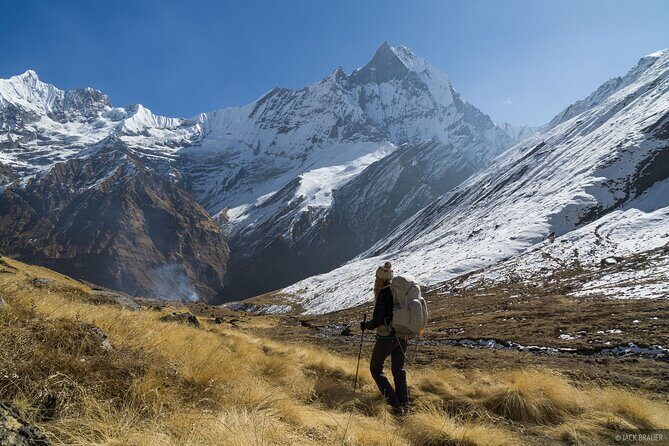
- Annapurna Base Camp day for wide panoramic views from the heart of the massif
- Recovery built in: Jhinu Danda hot springs after the long descent
- Pokhara rest day so you can reset before the final drive back to Kathmandu
From Kathmandu to Pokhara: the part you shouldn’t stress over
Day 1 starts with pickup from your Kathmandu hotel. You’ll just need to share your hotel name and address so the vehicle can find you. This matters because getting positioned correctly in Nepal can be half the battle, especially after travel days.
The package includes private transportation, and you’ll be carried to the trail start area near Pokhara so you can actually begin trekking on schedule. Then, the trek proper starts on Day 2 with a drive from Pokhara to Nayapul, followed by the walk into the Annapurna region.
A nice touch: you’ll receive a mobile ticket, which is helpful for keeping everything in one place. It doesn’t change the mountains, but it can reduce small-day confusion.
Other Annapurna Base Camp treks reviewed in Pokhara
Days 2–5: Chumrung, Dovan, Deurali, then the big Base Camp push
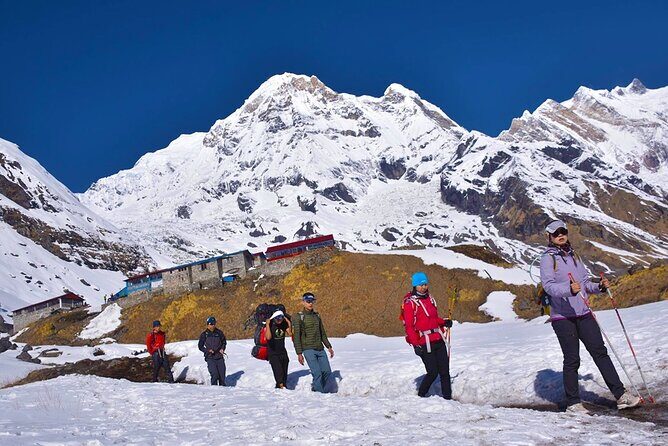
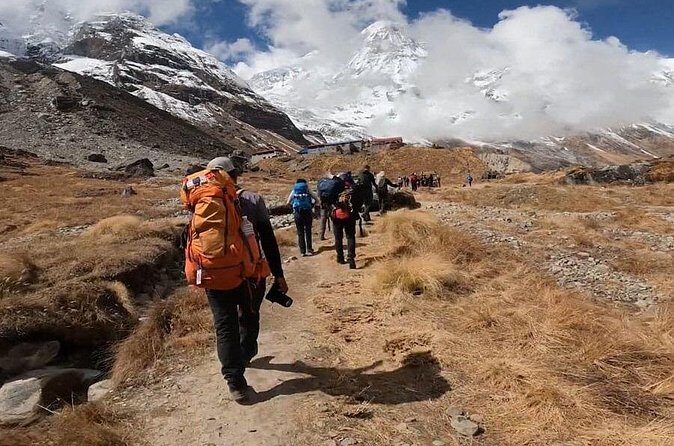
Days 2 through 5 are the core climbing stretch, and each day has its own “feel.” The route steps upward through forested sections and village areas, then progressively gives you bigger mountain views as you gain altitude.
Day 2: Nayapul to Chumrung
You start after the drive to Nayapul and trek toward Chumrung. This section runs through lush forests and local villages, so the hiking feels like a real journey rather than just climbing through empty trail. It’s also a useful warm-up day: you’re working, but you’re not thrown immediately into the highest terrain.
Day 3: Chhomrong to Dovan
This day goes higher and turns greener. You’ll trek from Chhomrong to Dovan through rhododendron forests, with steady climbing toward higher elevations. Rhododendron season changes the look of the trail, but even outside peak bloom, forest walking can be cooler and mentally easier because the trail feels broken into smaller sections.
Day 4: Dovan to Deurali
Day 4 is a clear altitude gainer. The trek climbs toward Deurali and passes through dense forest for mountain views that start to feel more frequent. This is one of those days where good pacing matters more than speed. If you try to “win” the climb, you’ll pay for it later.
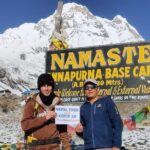
Day 5: Deurali to Annapurna Base Camp
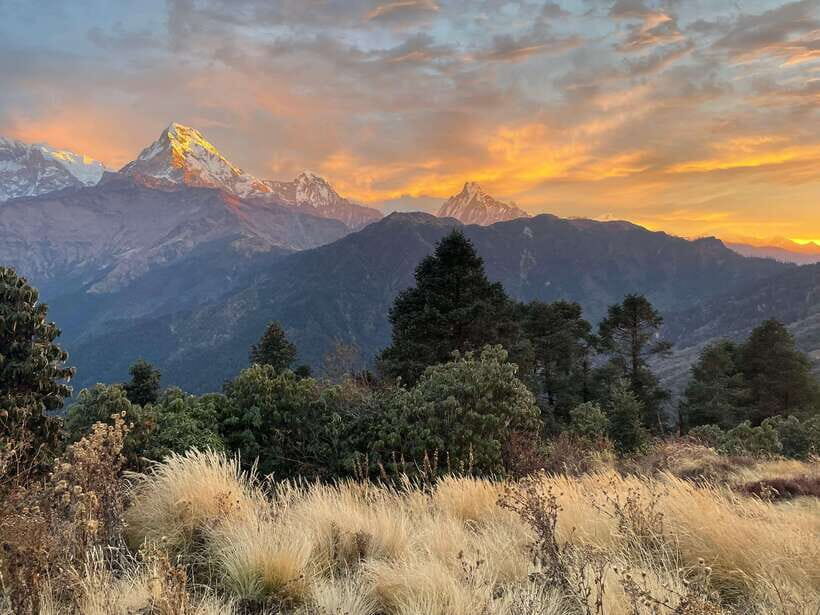
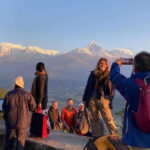
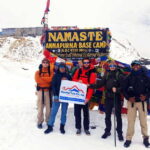
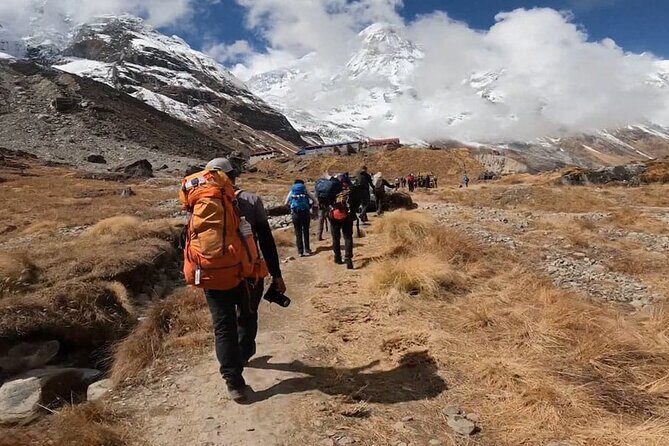
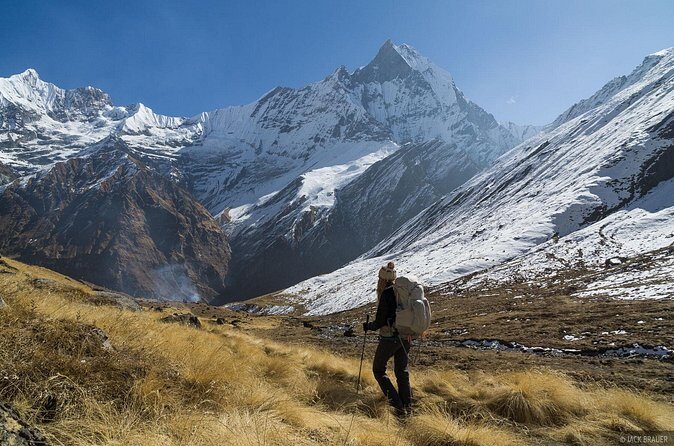
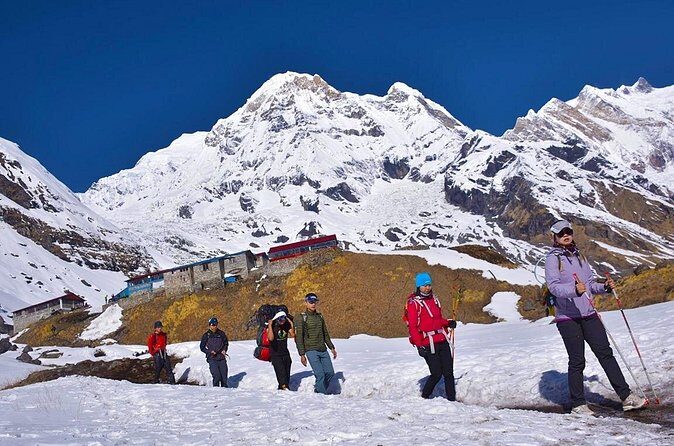
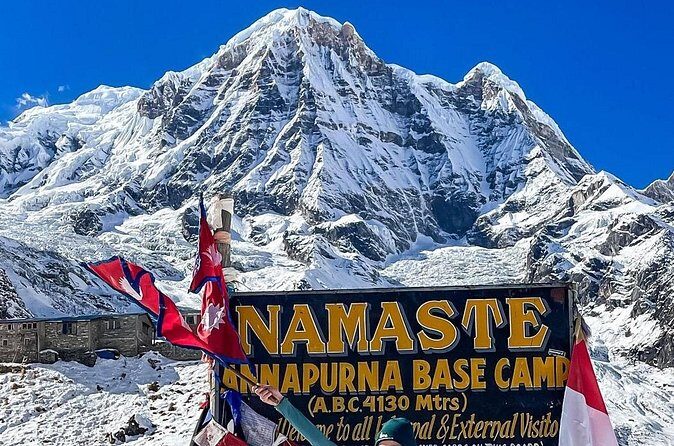
This is the payoff day: trekking from Deurali to Annapurna Base Camp. You reach the heart of the Annapurna massif and get breathtaking panoramic views of surrounding peaks. Even if the weather turns a bit, the Base Camp area is a dramatic spot—you’ll remember the change from tree cover and ridgeline hiking into wide open mountain bowl energy.
Practical tip: treat Day 5 like a slow victory. You’ll want to arrive feeling stable enough to enjoy the viewpoint time, take photos, and not sprint back to your room.
Days 6–8: Bamboo descent, then Jhinu Danda hot springs
After Base Camp, the goal shifts from reaching to recovering. These days are still hiking days, but the mood changes from “how high can we go” to “how steady can we move.”
Day 6: Annapurna Base Camp to Bamboo
You descend from Base Camp to Bamboo, and the scenery changes as you go down. Descents can be tougher on knees than the climb is on lungs, so take your time with foot placement, especially on rocky sections. The good news: the route keeps you moving through the region’s changing elevations rather than forcing a single brutal long day.
Day 7: Bamboo to Jhinu Danda
From Bamboo you continue your descent to Jhinu Danda. Then comes the highlight many people look forward to: natural hot springs at Jhinu Danda. After days of walking, soaking is more than a nice reward—it helps your legs feel less angry the next morning.
This is the kind of “strategic rest” that makes a big trek feel doable. It’s not a full stop, but it’s real recovery.
Day 8: Jhinu Danda to Nayapul, then drive to Pokhara
You trek from Jhinu Danda to Nayapul, and then you drive back to Pokhara. This gives you a clean way to end the trekking portion without extending the hiking into an extra night. Pokhara is where you can finally switch from trail life to normal meal timing and sleep.
Day 9 in Pokhara: a rest day you’ll actually appreciate
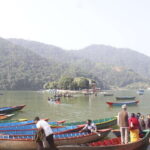
Day 9 is a built-in break, and it’s not just “free time.” You get a day to rest and explore Pokhara at your own pace—especially around the lakeside area with local cafes and viewpoints.
This day matters because it helps you absorb the trek instead of rushing straight into travel. After a Base Camp itinerary, your body may not be sore everywhere, but it usually feels different. A low-stress day lets you recover enough to enjoy the final transfer back to Kathmandu.
The guide, the group, and daily comfort choices that matter
This is a private tour, meaning only your group participates. That can be a big deal on trekking trips. It often means you can follow your guide’s pacing and adjustments without feeling like you’re constantly negotiating with strangers.
Your guide is listed as English, Hindi, and Japanese, which helps if you’re trying to get route explanations, altitude guidance, and local context without language gaps. And from the way the company supports customers, the planning style is meant to be stress-free: the office team is set up to help organize details ahead of time, and that usually shows up in smoother check-ins and less confusion during transitions.
You’ll also be moving with porters as part of the all-inclusive setup described in the package overview. Even when you’re motivated to carry your own day pack, having that support for heavier items can change how you experience the climb.
Other hiking tours in Pokhara
Meals, accommodation, and the drinks budget
The package includes breakfast, lunch, and dinner during the trek. That’s a practical advantage in Nepal because food logistics can be unpredictable if you travel without a plan. For many hikers, knowing meals are covered is what keeps energy steady for each day.
Accommodation is included in the package overview as well, so you’re not scrambling for beds after you finish hiking. You’re still going to sleep like a trekker—simple rooms, early nights, and basic comfort are typical—but the point here is consistency.
One clear note: drinks or other beverages aren’t provided. So you’ll want to budget for water and any extras you like during breaks. If you’re sensitive to altitude, plan on buying water consistently and not skipping hydration just because you want to save a little money.
Value check: is $1,150 per person fair for this 10-day trek?
At $1,150 per person for about 10 days, this is not a budget excursion. But the value isn’t only about days on a trail. It’s about what’s included: private transportation, meals (breakfast/lunch/dinner), permits/fees, guide services (English/Hindi/Japanese), accommodation, and porters, plus the built-in hot springs experience and a Pokhara rest day.
If you were to DIY this, you’d still pay for permits, food, lodging, guide/porter time, and transport—just with more moving parts and more chances for delays. The tradeoff with this package is that you’re committing to a defined route and pacing, not improvising on a whim.
For me, the price feels strongest if you want a low-stress, managed trek where your biggest decision is how slowly you’ll walk when the trail steepens.
Sustainability and community-minded trekking
The package states a commitment to sustainable tourism that supports local communities and helps preserve the environment. On a trek like Annapurna Base Camp, that matters because heavy foot traffic and careless waste can hurt fragile areas. When companies build sustainable practices into how they operate—especially around guides, porters, and local partnerships—it can reduce the “tourism shortcut” feeling and keep benefits closer to the people living along the route.
Should you book this Annapurna Base Camp package?
If you want a Base Camp trek with clear logistics, guided support, and a recovery plan that doesn’t ignore the human body, I think this package is a smart match. The combination of Base Camp views plus Jhinu Danda hot springs and a Pokhara rest day is exactly the kind of pacing that makes long trekking feel manageable.
I’d reconsider if you’re looking for maximum flexibility day to day, or if you’d rather keep costs ultra-low by handling permits, transport, guides, and meals yourself. Also, be honest about your fitness: this trek is listed for moderate physical fitness, and altitude plus long hiking days aren’t something to treat casually.
FAQ
How long is the Annapurna Base Camp trek on this package?
The trek is listed as 10 days (approx.).
Where does the tour start and end?
The tour meeting point is listed as Pokhara Airport, and it ends back at the meeting point. The itinerary also includes a private vehicle return to Kathmandu at the end.
What meals are included during the trek?
Breakfast, lunch, and dinner are included on the trekking days, including lunches across the itinerary.
Are drinks included?
No. Drinks or other beverages are not provided, so you’ll need to budget for them.
Are permits and fees included?
Yes. All fees and taxes are included, and the package overview also notes permits are covered.
Is the trekking group shared with other people?
No. This is a private tour/activity, so only your group participates.
Is there free cancellation?
Yes. Free cancellation is available up to 24 hours in advance for a full refund.