REVIEW · POKHARA
5 Day Mardi Himal Base Camp Trek in Pokhara
Book on Viator →Operated by CAN Travels · Bookable on Viator
That first steep path toward Mardi feels like a promise. This 5-day Mardi Himal Base Camp trek from Pokhara strings together rhododendron forests, camp-to-camp days, and big Annapurna-range payoffs—plus village culture with Gurung and Magar communities along the way. You also get practical help: hotel pickup in Pokhara’s lakeside area and a guide who manages the paperwork and day-to-day trekking flow.
I love the time efficiency here. In just about five days, you climb through changing vegetation—from lush rhododendron forest trails to higher, colder ridges—and then push to Mardi Himal Base Camp for those Machhapuchhre, Annapurna South, and Hiunchuli views. I also like that the trip is well structured around defined camp and viewpoint stops, with English-speaking guidance and guesthouse accommodation each day on the trek.
One possible drawback: this is still a real trek. Some days run around 6 to 7 hours of walking, including a narrow, steep push up toward Base Camp, so you’ll want genuinely solid moderate fitness—not just good intentions.
In This Review
- Key highlights worth knowing
- Why Mardi Himal Works So Well for a 5-Day Trip From Pokhara
- Price and Logistics: What $230 Actually Buys You
- Day-by-Day Trek Plan: From Pitam Deurali Views to Mardi Base Camp
- Day 1: Pokhara to Kande, then toward Australian Camp
- Day 2: Pitam Deurali to Low Camp through rhododendrons and wildflowers
- Day 3: Low Camp up through oak and rhododendron to High Camp
- Day 4: Early push to Mardi Himal Base Camp
- Day 5: Siding to Lumre, then back to Pokhara
- What the Trek Feels Like: Forest Steps and the Final Steep Squeeze
- Guides, Permits, and Guesthouse Comfort That Keeps the Trip Moving
- Food, Timing, and Gear: The Stuff That Makes or Breaks Your Comfort
- Who This Trek Suits Best (And Who Might Re-think It)
- Should You Book CAN Travels for Mardi Himal Base Camp?
- FAQ
- What is the duration of the Mardi Himal Base Camp trek?
- Where does the trek start from and how do you get to the trail?
- Is hotel pickup included?
- What kind of guide do I get?
- Are trekking permits included?
- Where do you sleep during the trek?
- Is food included in the price?
- How do you return to Pokhara at the end?
- What time does the experience start?
- Is this a private tour?
Key highlights worth knowing
- English-speaking guide support with an emergency first-aid kit on hand
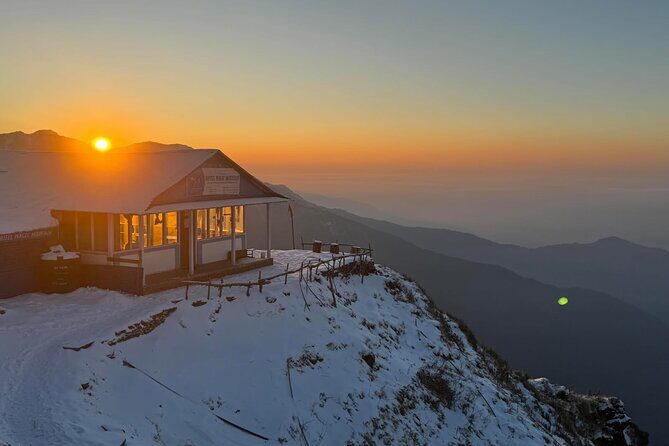
- Rhododendron forest trekking with oak and rhododendron sections higher up
- Machhapuchhre and Annapurna-range viewpoints on clearer stretches
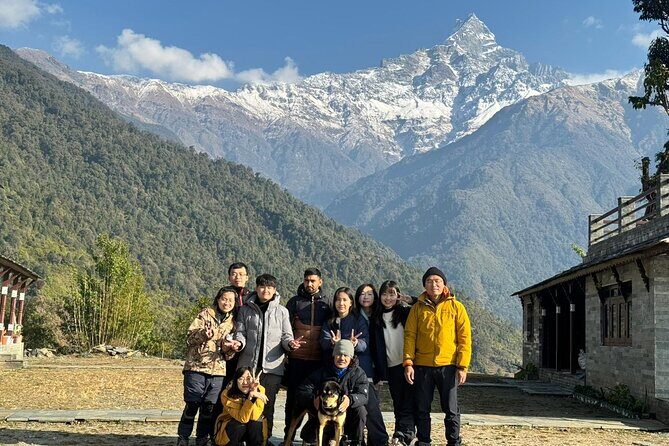
- Private group feel (your group only), with pickup/drop-off in lakeside Pokhara
- Guesthouse accommodation included during the trek, but meals are extra
- Transfers by bus/jeep to cut down on backtracking
Why Mardi Himal Works So Well for a 5-Day Trip From Pokhara
Mardi Himal is the kind of trekking goal that fits travel reality. You’re not signing up for a marathon of weeks. You’re getting a concentrated climb through the Annapurna region with enough variation to feel like more than one kind of hike.
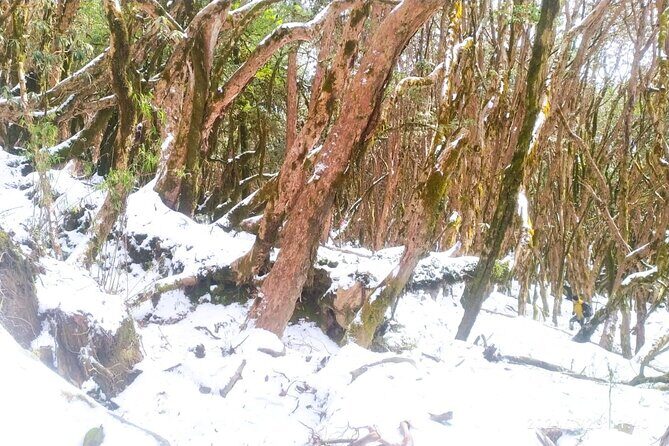
From Pokhara, the plan starts with getting you into position fast. You drive from Pokhara to Kande, then begin walking from there. Over the next days, you move through a camp sequence that gradually shifts the scenery: first the warmer forest feel with rhododendrons and wildflowers, then higher oak and rhododendron, and finally the steeper, narrower route up to Base Camp.
If you’re craving that Himalayan moment—snow-capped peaks in view—this route is built to give it to you without demanding a huge time budget. And because the trail passes through communities like the Gurung and Magar villages, you don’t just walk through scenery; you also meet the people whose lives connect to these paths.
Other Mardi Himal treks reviewed in Pokhara
Price and Logistics: What $230 Actually Buys You
The listed price is $230 per person, and what you get for that matters more than the headline number.
You’re paying for the basics that usually cost money and time to arrange yourself:
- Hotel pickup/drop-off in lakeside Pokhara
- An English-speaking trekking guide
- Permits and official document handling
- Guesthouse accommodation during the trek
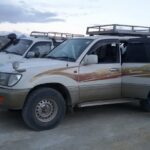
- Pokhara to Kande transfer by shared bus or jeep
- Lumre to Pokhara transfer by shared bus or jeep
- Emergency normal first aid kit with the guide
- Private tour setup for your group
That’s a lot of friction removed. Permits and logistics can be the part of trekking planning that quietly eats your energy. Here, it’s handled for you, so you can focus on walking, breathing, and enjoying the views.
What’s not included is also clear:
- Food and drinks (available for purchase, about US$25 per person)
- Gratuities (optional)
So I’d treat $230 as the trekking framework, not the full trip budget. If you’re eating and drinking daily on the trail, you’ll want to plan for the on-the-go purchases. Still, many trekkers prefer this setup because you can control what you eat and how often you stop.
One more practical note: the trip is listed as private, but it still uses shared transport for the transfers. That’s a fair compromise—less cost, still organized.
Day-by-Day Trek Plan: From Pitam Deurali Views to Mardi Base Camp
Here’s how the rhythm builds across the five days, and what to watch for on each one.
Day 1: Pokhara to Kande, then toward Australian Camp
You start with a drive out of Pokhara toward Kande, taking in countryside views along the way. Then the trail begins and you follow the route through forested hillsides. The day continues to Australian Camp.
This is a good warm-up day. It’s long enough to settle you into trekking mode, but not framed as an all-out summit push. You’re essentially getting your legs working while you start seeing how the forest changes with altitude.
Trekking time is listed around 6 hours, so pace matters. If you sprint early, you’ll pay later.
Day 2: Pitam Deurali to Low Camp through rhododendrons and wildflowers
After breakfast, you trek from Pitam Deurali toward Low Camp. The route heads north and moves into a dense forest that’s known for rhododendrons and wildflowers.
This is the kind of day where you’ll want to breathe through your effort and actually look around. Lower to mid-elevation stretches can be incredibly scenic for hikers who get tired of only thinking about distance and elevation.
This day is also listed at about 6 hours. You’ll likely feel it in your thighs, but it’s generally the kind of terrain you can manage if you keep a steady pace.
Other hiking tours in Pokhara
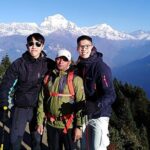
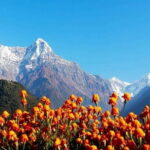
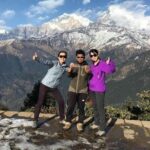
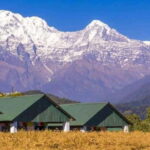
Day 3: Low Camp up through oak and rhododendron to High Camp
Today you ascend from Low Camp to High Camp, with the trail passing through oak and rhododendron forest. There’s a camp-to-camp rhythm: you reach Middle Camp in about 1 to 2 hours, then continue on to High Camp.
This structure is useful because you get natural breaks. And it makes it easier to mentally break up the day. Trekking feels less like one long grind and more like a series of smaller goals.
Day 3 is listed around 5 hours, which makes it a solid hinge day—enough walking to keep momentum, but not so long that you arrive at Base Camp on empty.
Day 4: Early push to Mardi Himal Base Camp
You leave High Camp early and head for Mardi Himal Base Camp. The route becomes more serious: a narrow, steep trail climbs to the base area.
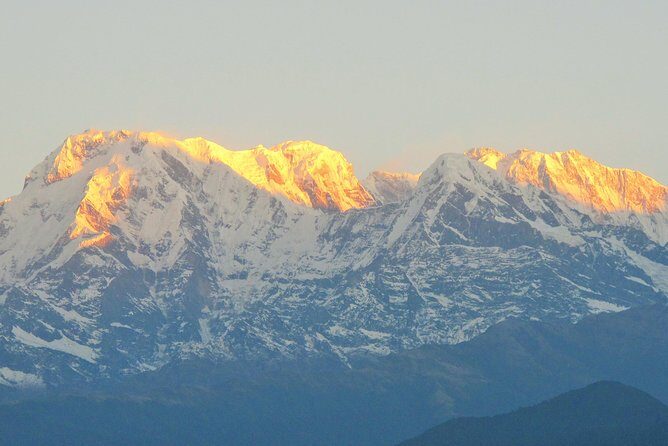
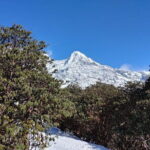
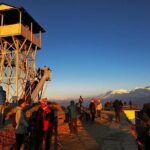
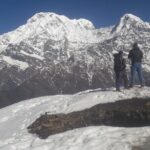
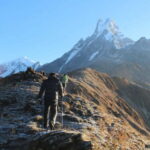
This is the day where the trek earns its reputation. You’re aiming for the big view payoff of the Annapurna region, and you’re doing it after several days of gradual ascent. When the air clears and the light hits, this is when Machhapuchhre, Annapurna South, and Hiunchuli can come into focus.
Trekking time is listed at around 7 hours, so don’t underestimate fatigue. Start slow, keep your breathing steady, and plan to enjoy the final push rather than just survive it.
Day 5: Siding to Lumre, then back to Pokhara
Your last trekking day takes you from Siding down to Lumre, passing lush forests and small settlements. From there, you use a local jeep and then transfer back to Pokhara by shared bus or jeep.
This is a satisfying way to finish: you still get walking time, but you shift into descent, where your legs recover and you can enjoy the trail without the stress of climbing.
Day 5 is listed around 7 hours total. It might feel easier than the ascent days, but descent can still be hard on knees and ankles, especially with uneven footing.
What the Trek Feels Like: Forest Steps and the Final Steep Squeeze
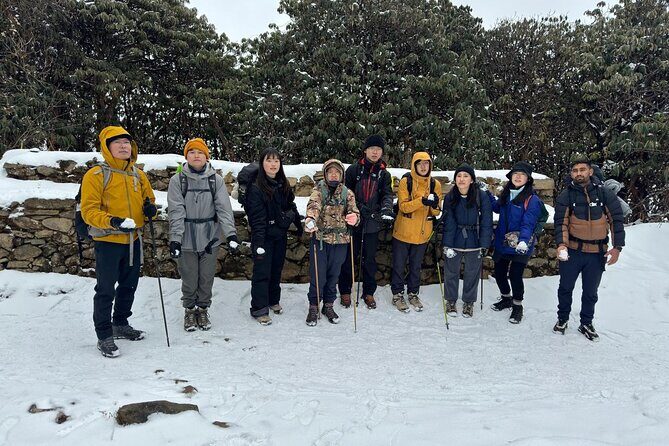
This trek has a clear texture change across the days, and that’s one of its strengths.
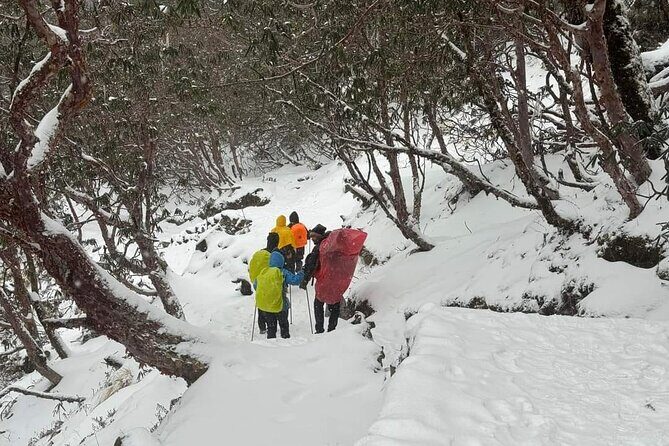
Lower down, you’ll likely spend time in rhododendron forests with wildflower sections. That means more sensory trekking—smells, shade, and a trail that feels alive beyond just the view at the top.
As you go higher, the trail shifts into oak and rhododendron mix. The air can feel different, and the walking becomes more about rhythm than about distractions.
Then comes the Base Camp route: the description calls it a narrow, steep trail. Translation: fewer places to relax your pace. You’ll need to watch your footing and keep your effort consistent.
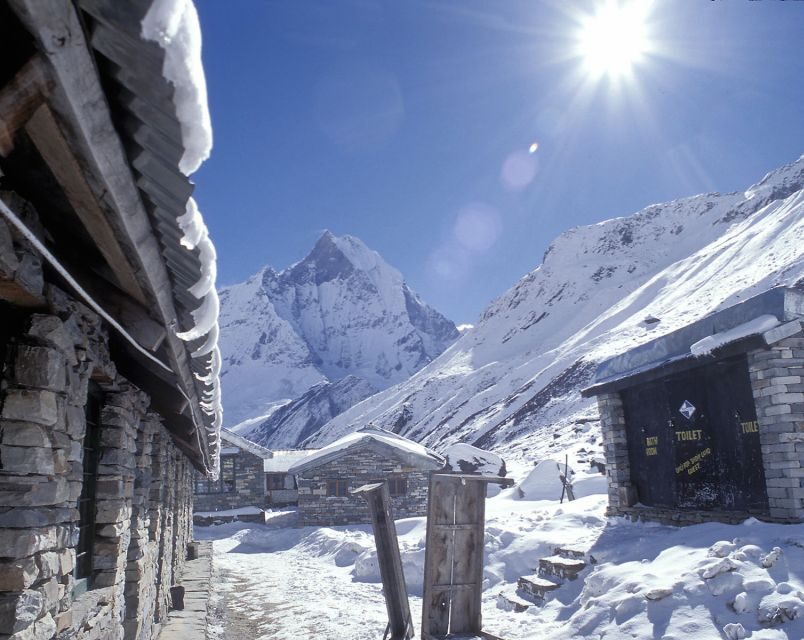
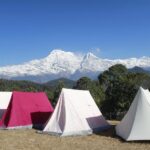
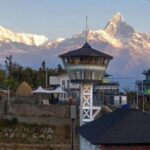
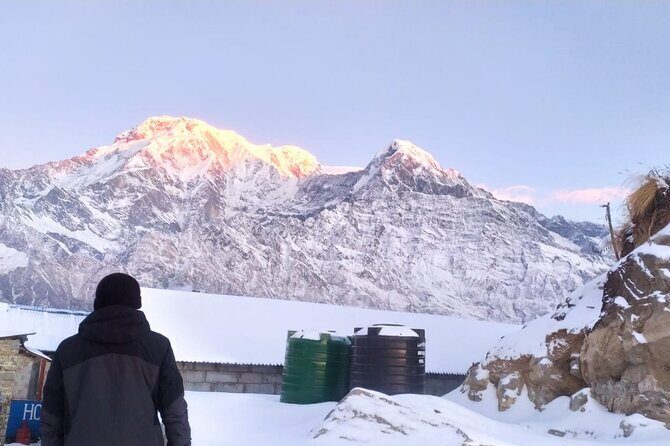
For the views, this trek is about recognizable peaks. You’re in the Annapurna region, with target sightlines including Machhapuchhre (Fishtail), plus Annapurna South and Hiunchuli. The magic isn’t constant; it’s often tied to weather and visibility. But the itinerary is built to give you multiple chances—especially as you approach Base Camp.
Guides, Permits, and Guesthouse Comfort That Keeps the Trip Moving

The most important part of a trek is often invisible. It’s not only the trail; it’s how smoothly you move from one day to the next.
Here you get:
- an English-speaking trekking guide
- trekking permits and official documents handled for you
- guesthouse accommodation during the trek
- a normal first-aid kit carried with the guide
That last item matters because high terrain is unpredictable. Even on shorter routes, conditions can change quickly.
The guide quality also shows up in past experiences. Some groups have had guides like Amrit, who’s praised for keeping things organized and making the trek smooth and enjoyable. Other names you may see attached to similar trips include Biru and Bikram, also described as professional and helpful with arrangements on the trek.
You should treat that as a sign of what to look for when you meet your guide: clear communication, steady pacing, and practical decisions about timing and comfort.
Food, Timing, and Gear: The Stuff That Makes or Breaks Your Comfort
Food is not included, but it’s available for purchase—listed at around US$25 per person. That means you should plan for daily meals and drinks as part of your budget.
What I recommend in practice:
- Bring a simple snack plan for the moments you don’t want to wait for a full meal.
- Expect to buy food on the trail where it’s available, since your guide can’t magically include meals if they aren’t part of the package.
You also need to be ready for a long day even if it’s not technical. Several trekking days are listed around 6 to 7 hours.
Finally, check the start time listed for the experience: 12:15 am. That’s extremely early, so even if local pickup means you meet the driver well before you think you will, plan for it. Trekking works best when you’re not fighting sleep and stress.
Who This Trek Suits Best (And Who Might Re-think It)
This trek fits travelers with moderate physical fitness who want a real Himalayan trek without a longer expedition.
I think it’s especially good for:
- hikers who want big-peak views in a short window
- people who prefer organized logistics (permits, transfers, guesthouse stays)
- groups who like a private tour feel but don’t need custom private transport for every segment
Re-think it if:
- you get uncomfortable with steady steep walking
- you’re expecting an easy stroll (some sections are described as steep and narrow)
- you don’t want to manage additional daily expenses for meals and drinks
Also consider your comfort with descent. Day 5 is a long descent to Lumre, and descending for hours can be tough even when it feels less dramatic than climbing.
Should You Book CAN Travels for Mardi Himal Base Camp?

If you want a structured, short trek with real Annapurna-range views and you’d rather not handle permits and transfers yourself, this is a strong choice. The included guide, guesthouse accommodation, and permit/document support are exactly the parts that usually turn a good idea into a stressful planning project.
My main “yes, but” is budget awareness. The trip price covers the trek framework, but you’ll still spend on food and drinks during the trek. If you plan for that, the value feels fair.
And if weather or timing changes your plans, the experience is listed with free cancellation up to 24 hours in advance for a full refund—so you have some wiggle room.
If you’re deciding between shorter options in the region, this one stands out because it combines forest trekking, camp-to-camp pacing, and a clear aim for Mardi Himal Base Camp within about five days.
FAQ
What is the duration of the Mardi Himal Base Camp trek?
The trek is listed as 5 days (approx.).
Where does the trek start from and how do you get to the trail?
You’ll be picked up in Pokhara’s lakeside area and drive to Kande, where the trek trail starts.
Is hotel pickup included?
Yes, hotel pickup and drop-off within the lakeside area in Pokhara is included.
What kind of guide do I get?
The package includes an English-speaking trekking guide.
Are trekking permits included?
Yes. The tour includes the trekking permit and all official document handling.
Where do you sleep during the trek?
You’ll stay in a guest house during the trek.
Is food included in the price?
No. Food and drinks are not included and are available for purchase (listed as approx US$25 per person).
How do you return to Pokhara at the end?
After descending to Lumre, you take a local jeep and then transfer back to Pokhara by shared bus or jeep.
What time does the experience start?
The start time is listed as 12:15 am.
Is this a private tour?
Yes. It’s described as a private tour/activity, meaning only your group will participate.